Showing posts with label Karel Holomek. Show all posts

Monday, August 30, 2010

Speaking Truth to Power: A Conversation with Karel Holomek, a Vital Voice in the Roma Rights Movement

Earlier this month, following the Roma Holocaust commemoration ceremony at the site of the former "Gypsy" concentration camp near the town of Hodonín u Kunštátu, I had the chance to sit down and talk with Karel Holomek, one of the most esteemed Czech Romani community leaders.

He shared with me his concern about the recent political developments and their impact on his future cooperation with the Czech government as a human rights activist.

"I will speak about politics now, because politics for me is a fundamental thing. Everything stems from there," said Mr. Holomek, sharing a table with me in the breezy, contemporary, urban, yet relaxed setting of the cafe at the Museum of Romani Culture, an institution he co-founded nearly twenty years ago in the Czech city of Brno.

Mr. Holomek is the son of the first Czech Romani university graduate and the father of the historian and Museum of Romani Culture director Dr. Jana Horváthová. He is a celebrated international human rights advocate, chairman of the Society of Roma in Moravia and current Ambassador of the Decade of Roma Inclusion 2005 - 2015, an initiative that brings together the governments of twelve European countries and NGOs “to accelerate progress toward improving the welfare of Roma.“


[Ing. Karel Holomek, photo by Chad Evans Wyatt]

"I reject the attitude politicians display toward the people who challenge them," Holomek continued, "in the vein of 'don't meddle in our dealings; we are now discussing culture, we are discussing language, we are discussing literature.' Politics doesn't belong in these types of conversations, they say. But, unfortunately, it does belong there, and in a very significant way."

"My big topic at this time is this," said Holomek. "The government, after the (May Parliamentary) elections came out with its new policy outline. The administration announced, to the satisfaction of everyone with common sense, that it is an administration whose priority is a balanced budget."

"We accept that," Mr. Holomek elaborated. "But I always add that government savings measures do not have to mean going broke."

Holomek went on to criticize Prime MInister Petr Nečas' choices of staff: "The new administration took the next step of making changes in staffing. It nominated the ministers. Pavel Drobil, who was named the Minister of Environment, is a man who is dedicated to the industrial lobby. He does not even hide that fact. He says such nonsense as 'nature is there for the people, not people for nature,' which is a completely primitive slogan, almost as if meant for simpletons. The Minister of Environment is only proof of what the government plans to do regarding the environment. They don't have to play the charade that they will work for the people."

"The second concern I have is the new advisor on human rights to the Prime Minister," Holomek went on. "I consider Roman Joch to be on the borderline of acceptability. I would go as far as to say, and many would agree with me, that, opinion-wise, he is a neo-Nazi. His opinions include: the constitution is the only force needed to protect human rights; everyone is equal in the court of law; the courts should decide."

Holomek asserted that Czech courts are often incapable of carrying out just judgements, because they are corrupt, a sentiment I have heard echoed from many activists, even a long-time human rights lawyer in this country.

Regarding the lack of legitimacy of Czech courts, Holomek said: "In reality, we have a judicial mafia here. Some people do not realize this, but most of the nation understands that the highest posts are occupied by a judicial mafia."

"All the people the Prime Minister has selected come from the Václav Klaus administration," observed Holomek. "And that epoch had a very negative effect on the cultivation of the society, morale, but even in economics. Nečas is probably, with these staffing choices, making deals or amends with Klaus's political party. That is his problem. But there is no reason we should tolerate this."

Holomek was referring to the years, specifically the early to mid-90s, following the Velvet Revolution when the regime shifted practically over night from a centrally-planned socialist economy to "free-market" capitalism. The Czech government relatively quickly privatized the majority of state-run business, selling disproportionately large amounts of assets to foreign-owned entities. This transition resulted in significant job losses (in the Czech Republic namely in the agriculture and manufacturing sectors) and wage depression. What followed was a societal reorientation towards rampant consumerism and the general weakening of social safety nets.

"My dilemma is now with this," confided Holomek. "On July 1, the Czech government took over the presidency of the Decade for Roma Inclusion. I was there in a meeting with still the previous Prime Minister and I was selected to be, so to speak, the face of the Decade. They even call me the Ambassador."

Holomek's reaction was mixed. He said that he would be happy to represent the Decade if it had the power to bring about concrete change: "It makes me smile, because it is a highly honorable, but unfortunate function and, of course, without a crown. If I were an ambassador who could do something, who could be the person who receives and allocates the funds dedicated to the initiative, it would be a whole different thing."

"There are two problems here," Holomek explained. "The decade is a completely 'sterile' project, which has so far taken only the form of international conferences. These are completely insignificant events, during which twenty, thirty or forty like-minded people get together and complain about how things are not working and how something should be done, and during which not a single government official ever participates, let alone to say: I acknowledge you and what should we do about it on our part?"

"When I accepted my role as Ambassador," explained Holomek, "I said we have to do something concrete. There needs to be a shift forward. I don't think I will continue being the face of the initiative, if no development happens. I went to the administration and proposed some measures to be taken (toward Romani integration), but I was told immediately by the Office of the Government that there is no money for those efforts."

Holomek said that the combination of a having a person in office with whom it is impossible to cooperate, and the prospect of no expected progress in sight, makes it so that he cannot possibly continue being the face of the Decade: "I would accept it all and continue to risk and move forward if there were at least someone in the administration who would be supportive."

"With my years of experience," Holomek contended, "I am a trusted person and I am willing to do anything (to improve the situation for the Roma), but not with these people in the government."

"Now I just have to wait and see whether the PM will grant me a meeting with him," Holomek concluded, "so I can tell him eye-to-eye, bluntly as is my style, how I see the situation and how angry he has made me."

Karel Holomek is one of the signatories of ProAlt, a grassroots initiative opposing the new Czech government's priorities. I, too, have signed the initiative, which I hope will constitute a vital force that keeps in check the new conservative administration who, so far, seems deaf to the concerns of human rights and minority advocates.

***
[Originally posted on Tereza Bottman's Advocacy Project blog.]

Friday, August 27, 2010

Museum of Romani Culture: Paving the Way Toward Opportunity and Understanding

“We are a space where different cultures meet. We preserve examples of Romani cultural history as part of Europe´s heritage. We educate the younger generation to be tolerant and to appreciate other cultures,” proclaims the motto of the Museum of Romani Culture, based in the Czech city of Brno. “We are committed to fighting xenophobia and racism. We are paving the way to a new understanding of the roots of Romani identity. All this we do in the name of mutual understanding. For a dialogue of cultures. For us.”

“A Romani museum of our scope does not exist anywhere else in the world,” explains Museum of Romani Culture director Dr. Jana Horváthová, who co-founded the institution in 1991 along with a group of scholars and community leaders, including the prominent Romani activist, current Ambassador of the Decade of Roma Inclusion, and Horváthová’s father Karel Holomek.


[Museum of Romani Culture. Photo credit: wikipedia]

The permanent exhibition traces Romani culture and history from the time of the Romani migration from India centuries ago up until present-day life in the Czech Republic.

“Our goal is to create the broadest possible collection of original documentation for the presentation of Romani history and culture,” says Horváthová.

Particularly well-documented and moving is the section on the Roma Holocaust, which comprises scores of photographs, testimonies, newspaper articles, official documents and original correspondence.


[Museum of Romani Culture Director. Photo by Tereza Bottman]

Other sections include artwork by Romani artists, cultural artifacts and descriptions of traditional customs and music. The exhibit also shows the history of Romani political activism in the Czech Republic as well as a collage of Roma-related press headlines collected over time and together forming a complex picture of the media coverage of Roma-related issues.

“Our museum is really an exemplar and a first of its kind,” Horváthová continues, “a fact which the Czech Republic perhaps does not value as much as it should.”

“There aren’t many Romani museums, ” Horváthová says, listing all other Roma-themed museums and permanent exhibits around Europe, including the Museum of Romani Culture in Slovakia, part of the Slovakian National Museum, and the Tarnów Ethnographic Museum, which now houses Poland‘s first permanent Roma-themed exhibition. She also mentions The Interpretation Centre and Ethnographic Museum in Granada, Spain, where an original Romani cave dwelling complex can be viewed.


[Museum of Romani Culture. Photo by Tereza Bottman]

In addition to the permanent exhibition, the Czech Museum of Romani Culture periodically presents temporary exhibitions of art and photography. The museum is also a Romani studies research center for all of Central Europe. It houses a Roma-themed library and bookstore as well as organizes lectures, concerts, panel debates and Romani language courses.

“We always say that it is important for people to come the first time and then visitors tend to return,” says Horváthová. “There are many people who hear about us and think that it is terrible here, that we are located in a slum. They are afraid of coming to a Romani neighborhood, so this type of prejudice deters many potential customers.”

“My wish,” Horváthová continues when asked about her vision for the future, “is for us, after so many years of effort, to be able to break the society-wide aversion toward the Roma.”

The museum has worked intently to make this vision a reality. The institution’s scope extends to helping to give Romani children a fair chance at adequate and academically challenging education.

In conjunction with the museum’s extensive afterschool education offerings for the neighborhood children, which include art, sports and performance classes as well as tutoring, a new program centered around integration of the chronically segregated Czech school system is underway.

As part of the program, a number of children have been identified by the museum’s educators for extra academic support and integration into schools with predominantly majority-population children in other areas of the city outside “the ghetto.” During the upcoming school year, the Romani children participating in this program will be accompanied by staff and bussed to new schools in order to improve their chances for a better education and future.


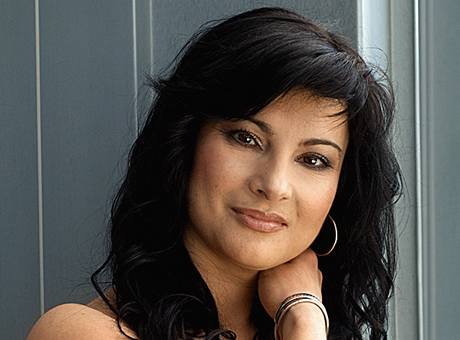
[Dr. Jana Horváthová, Museum of Romani Culture Director.
Photo by Tereza Bottman]


“The segregated schools in this neighborhood,” explains Horváthová, “have a population of 90 to 100 percent Romani children. There the teachers cannot give extra attention to the more gifted students and the curricula are not the same as in mainstream schools. These students, even when gifted, have no chance of getting into secondary schools. We have already confirmed this over the years of running educational programs. And it makes us very sad when children that would do well in secondary school, even college, do not make it because their schools are so behind mainstream programs and the children find it impossible to catch up to the level required for entrance exams and education at the secondary level.”

“These children will be pioneers,” says Horváthová. “The transition will be very difficult. The children are used to going to an all-Roma school, where it is, in a way an easier and more pleasant environment, because there they know the communication style and behavior of their classmates. When they begin in a classroom that is mostly non-Roma, it will be enormously stressful for them. They will need professional assistance. Without that, the transition is impossible to manage.”

When asked whether the teachers in the mostly majority population schools are prepared for the integration efforts, Horváthová explains: “What is needed to make integration successful are smaller class sizes and an educational assistant, preferably a Roma from the community, in the room, together with the teacher.”

She adds: “Very few teachers and classmates are aware of the reality of the child living in a ghetto and all the things the child has to deal with when entering the surrounding world.”

“Teachers from the majority population have gaps in this area. One of the programs we provide are educational seminars for teachers, which acquaint them with Romani history and culture,” she continues. “We often advise teachers who write us and ask us what they should do, how they should work with their Romani students.”


"I like the afterschool programs a lot," says a fifth-grader who attends English language lessons and tutoring sessions at the museum in the afternoons. She says she likes learning languages and would like to also study Latin. In school, her favorite subject is Math. She wants to be a nurse or police officer when she grows up.

When asked whether she would be participating in the school integration program, she said she would very much like to, but that her mother is afraid: "My mom is scared because the other school is too far, that a tram could hit me or that I could get lost."

"Family support is a substantial, if not key ingredient, along with the child's internal motivation, in determining which of the children are chosen for the program. If the parents did not understand or agree with the placement, it would be almost impossible to retain the child at a prestigious school," explains Horváthová.

As far as a systemic change which would ensure all-around success on the school integration front, Horváthová believes much work has yet to be done.

“Ever since the revolution in 1989,” says Horváthová, "our organization has been calling for systemic change in the arena of education, but each time a government is replaced following an election cycle, a new minister is put in place who must familiarize himself with the situation, which makes systemic reform very difficult.”

Horváthová calls the museum’s school integration program daring and adventurous and says that even with all their effort, success is not guaranteed.


[Museum of Romani Culture, photo by Tereza Bottman]

“We have been observing a trend that shows that many Roma who do leave ‘the ghetto’ and do obtain higher education often have an interest in communicating with Roma from different groups inside the community which is very diverse, and in working in the non-profit sector and helping their community toward a common goal of uplifting our ethnic group.”

Horváthová confides that the economic downturn has been difficult for her organization: “Today’s economic situation has been troubling for us and other museums, I am sure. Culture is probably, so to speak, our society’s Cinderella. So, we are afraid of how the future will pan out. I can imagine that currently even mainstream museums are having a difficult time sustaining themselves, but when we approach sponsors, they usually turn us down. The will to support any Roma-related activities is just not there.”


[Dr. Jana Horváthová, photo credit: iDnes]

Horváthová’s vision for the museum is to grow and to continue expanding its collections.

“Next year will mark twenty years of our museum's existence,” she concludes. “We have the spirit of a warrior, and we hope no one breaks that in us.”

***
[Originally published on Tereza Bottman's Advocacy Project blog.]