


The news server Romea reports that the Czech Government Human Rights Council has approved a resolution recommending the government provide one-time monetary compensation to all women who underwent forced sterilization by the State between the years 1972 and 1991when regulations from the Czechoslovak Labor and Social Affairs Ministry were in effect.
Here is a powerful short film about the practice of sterilization of Czech Roma institutionalized during communism, but practiced into the 2000s:
Showing posts with label Roma. Show all posts
Showing posts with label Roma. Show all posts
Tuesday, February 21, 2012

Violence against Roma on the rise across EU
The director of the European Roma Rights Centre (ERRC) testified at a hearing in Washington DC on February 16, 2012 stating that violence against Roma is on the rise across Europe.
This according to the ERRC:
Read more on the ERRC website.
This according to the ERRC:
A recent European Union Survey on Minorities and Discrimination highlights that on average one in five Roma respondents were victims of racially motivated personal crime at least once in the previous 12 months. 81% of Roma who indicated they were victims of assault, threat or serious harassment considered that their victimisation was racially motivated.
An ERRC report in 2011 found that the state rarely achieved successful prosecutions in cases of violence against Roma.
Read more on the ERRC website.
Thursday, March 10, 2011
Czechs Prepare to Say No to Hate this Saturday

Czech Roma and human rights activists are gearing up to take a stand against racism and neo-Nazism at a demonstration many fear could turn chaotic, even violent. This coming Saturday, March 12, the Workers' Social Justice Party (Dělnická strana sociální spravedlnosti - DSSS) is scheduled to gather and march through the town of Nový Bydžov, the new epicenter of anti-Roma sentiment in the Czech Republic.
The Workers' Social Justice Party says its mission is to stand up "against rising crime." The group's messages have consistently targeted and intimidated the Roma community, against whom the mayor of Nový Bydžov unleashed what some have called "a war on Gypsies" by collectively libeling this ethnic group following a rape of a 21-year-old woman in November 2010 by a suspect who was allegedly a Roma.
"The worst-case scenario," states a press release issued by Freedom Not Fear, a group which supports the counter-demonstration, "would be another attempt at a pogrom similar to the one that played itself out three years ago at the Janov housing estate in Litvínov," a town in the north of the Czech Republic.
Amnesty International, who plans to monitor the event, has just released a public statement urging "the Czech authorities to ensure protection of Roma in Nový Bydžov during a demonstration by the Workers’ Social Justice Party planned on 12 March."
"Following the Mayor’s statement," explains the Amnesty International public statement, "the Workers’ Social Justice Party welcomed 'open and truthful naming of the problem' and announced its readiness to help, including by providing monitoring patrols to the municipality."
The AI document also provides a bit of history on the Workers’ Social Justice Party (DSSS):
The Worker’s Party, the predecessor to the Workers’ Social Justice Party, was dissolved by the Supreme Administrative Court in February 2010. The Court held that its programme led to incitement to national, racial, ethnic intolerance and amounted to an attempt to infringe the basic rights and freedoms of certain groups, in particular the minorities.
Young Greens (Mladí zelení) civic association is one of the groups actively opposing the Workers’ Social Justice Party's message and upcoming neo-Nazi demonstration. In their statement and invitation to all others to stand up against hate this Saturday, the Young Greens explain:
This DSSS action has been convened under the guise of being "Against Rising Crime“. However, we believe, after this country's experiences with similar demonstrations in Litvínov-Janov and Přerov, that in reality this will be a hate gathering intended to exploit the anti-Roma mood in society in order to score more political points for the DSSS and the totalitarian, undemocratic ideas that party represents.
As you all certainly know, a group of mayors recently met in Nový Bydžov and has started calling for the increased repression of people whom this society has learned to generally call the "inadaptable" (often as a front for racism, xenophobia and other generally asocial worldviews) - even though the sociologist Stöcklová asserts that "'Inadaptability' or resistance is essentially a positive value in society. Rejection of that value made it possible for Nazism to prevail in Germany during the 1930s."
The official municipal web pages of the town of Nový Bydžov are shocking in the their anti-Gypsy content. There it is possible to read the completely open claim that "The Gypsies have committed rape!" The hatred against one group of the town's inhabitants culminated in the publication of a document entitled "The Town's Measures" on that website. This generalization about and condemnation of an entire ethnic group on the basis of legal violations committed by individuals is not only something completely unbelievable in the 21st century, but primarily borders itself on being a crime. We continue to believe in the democratic principles of the Czech Republic and in values such as a right to a fair trial, including the presumption of innocence, in respect for human dignity, and in human rights. The behavior represented by the leadership of Nový Bydžov seriously jeopardizes those values.
The problem of ostracizing a certain section of the population, however, does not end in Nový Bydžov. The ideological prevalence of anti-Gypsyism, together with anti-humanism, Europhobia and Islamophobia, is becoming ever more clear in our republic. In addition to the mayors' conference in Nový Bydžov, another possible piece of evidence for this is the recent attempt by Czech Education Minister Dobeš to appoint Ladislav Bátora, a former candidate for the ultra-right National Party (Národní strana - NS), to the post of first deputy minister, as well as the hysterical defense of Bátora by Czech President Klaus, a defense such has never been seen not only in the history of the Czech Republic, but in the history of the state of Czechoslovakia. Thanks to these political attitudes and the often one-sided stereotyping of societal diversity by the most frequently-consumed Czech media, hatred of the Roma community achieved unbelievable dimensions by the end of last year. This must be prevented. It is not possible to just stand by as the internal societal mood of the Czech Republic comes closer and closer to that of 1930s Germany, where it resulted in something everyone is convinced should never be repeated.
We have decided to call you to action, to call on us all and on all our friends to mobilize for active participation in the demonstration against the DSSS march and to express our emphatic disagreement with the growing right-wing extremism in the Czech Republic.
As the news server Romea reports, "strong tensions can be felt among residents of the town."
Regional police say they will increase their patrols in the town in order to protect people's property and ensure order.
The Nový Bydžov is not alone! Initiative, a group which is organizing the counter-demonstration, has called on the Czech Government Human Rights Commissioner to actively participate.
The organizers write: "Our gathering is being organized under the rubric of the newly-created Nový Bydžov is not alone! Initiative, whose members include Roma people living in Nový Bydžov and activists who have long been involved in human rights, often working in NGOs focused on Roma rights or other human rights topics." They emphasize the non-violent nature of the planned counter-protest.
If you are in the region, please join all those of good will and take a stand against hate this coming Saturday. More information on the protest here.
Sunday, September 5, 2010
Romea: Countering Stereotypes and Building Bridges through Media and Education
"Our colleagues in journalism, as much as we, are still looking for a way to write about the Roma and about Roma-related issues in a way that is not too ethnic; in a way that is not colored by various prejudices and stereotypes," says Jarmila Balážová, co-founder and chair of Romea Civic Association, a Romani media and education organization.
"It is not at all easy to do," she elaborates. "It has only been since (the Velvet Revolution in) 1989 that Czech journalists have been writing about the minorities. Even we are guilty of stereotyping sometimes, for instance, when we want to balance out a negative image of the Romani minority that continues to prevail in the Czech media. So sometimes we emphasize the ethnicity of a personality when it should not be done. But we do it to spread the word that Roma exist who are not known, and who, for example, represent this country on a national level in sports."
Jarmila Balážová is a woman in demand; a woman with charisma, vision and an uncanny amount of energy. She is an award-winning journalist and the driving force behind a number of programs and publications, including Czech Radio's Romani radio broadcast, "O Roma vakeren," which she founded and the Romani monthlies Amaro Gendalos and Romano voďi, of which she is editor-in-chief. Balážová is also a producer at Czech Radio 6, the former broadcasters of Radio Free Europe in Czech.

[Jarmila Balážová, photo credit: Romea]
Balážová established Romea in 2002, along with a group of others, following a training of young Romani journalists, offered by the Dženo Association. Zdeněk Ryšavý, who is now the executive director, was also one of the co-founders.
Romea's mission is to "motivate and involve predominantly young Roma in civic life as well as to contribute to better relations between the minorities and the majority population in the Czech Republic."
Romea runs a press service as well as an internet news server, which reports on events from the world of the Roma, and is, according to Romea's annual report, currently the country’s most-visited Romani server. The server regularly broadcasts TV news reports on ROMEA.tv in both, Romani and Czech language. The monthly Romano voďi, which Romea publishes, provides coverage of current events from the world of the Roma as well as articles on Romani literature, music, history, language. A portion of the magazine is directed at young Roma, who can find pages that profile active and successful Roma and a two-page section “Through Our Eyes” focusing on "youth" themes. Romea also produces “10 Minutes”, a talk show which profiles interesting Romani guests.
I had the opportunity in late August to talk with Ryšavý and Balážová at their office about their work and Romea's role in the Czech media landscape.
"I think that the vast majority of the media, in fact nearly all media, continue to reinforce various stereotypes concerning the minorities," maintains Balážová. "I must say that some media do it less, others more. A huge difference can be seen between those who have been dedicated to these issues long-term, using an analytical lens. The result depends on who is writing and who is in the leadership at the particular media outlet."
When asked to discuss the mission of Romea, Balážová explains that providing information, but also monitoring the press for factual accuracy are some of the key roles her organization plays.
"We bring information to the Roma themselves," Balážová says. "Our role rests in that we think that if the Romani community is not well informed, the members will not be very politically engaged; that they will not be able to defend themselves well. That is the reason we provide information. And we write about notable personalities for a more balanced (public image of the Roma)."
"We also try to bring opinions of the Roma on the issues, because white Czech journalists never or seldom ask Roma for their opinions," continues Balážová. "If it weren't for us at Romea, who put in the effort and approach a number of Roma to obtain their commentary so that Czech News Agency and others can use them as sources, the angle would never change."

"I get very upset," chimes in Ryšavý, "when we have to correct journalists when they write nonsense they don't doublecheck. They go somewhere where conflict is occurring and usually ask only those from the side of the white Czechs. That has happened to us many times. And the way the articles are framed because only the whites are asked, makes the Roma instantly into the perpetrators. Then when we collect quotes by the Roma and contact newspapers, asking them to include this information, they usually write us back that their organizations are objective, that they could not interview any Roma because they could not find any. That is absolute nonsense."
When asked what he finds most rewarding about his work in Romani media, Ryšavý says he enjoys introducing successful Roma to the public. "It is interesting," he reflects, "that these types of articles are not of interest to majority media outlets. In general, the media write about what is wrong, not what is positive. We try to correct that by trying to place articles with a positive spin in mainstream media."
Balážová says that occasionally positive coverage does appear, especially on Czech Television, and especially about children. She, however, points out that Roma-related topics are often viewed as their own separate domain.
"Often both, the public and the journalists, understand Romani-themed issues to be separate from the rest," Balážová explains. "When the issue is something that has to do with discrimination, exclusion, stealing or looting, Roma will be written about. But when it is something that is unexpected, for instance help is provided to flooded communities by the Roma and not just along ethnic lines, there is not too much interest."
"I think it is the main weakness of Czech media," Balážová asserts, "that they perceive the Roma divided from Czech society and not part of it. This idea tends to always be emphasized."
Regarding dreams for the future, Balážová jokes: "World peace." But then gets more serious, describing how over the last eight years of its existence, Romea has always struggled with funding and has had to rely on volunteers, in addition to the core paid staff.
Balážová explains that, even at the price of getting funding cut, her organization is critical. Because of that, she says, they have gotten "smacked across the fingers regarding taking on new projects," as she calls it.
"The nonprofit sector is very much affected by this phenomenon," Balážová continues. The Romani organizations which are dependent on state funding, she says, "will not do anything that could go against the government or some politicians, who are offensive or anti-Roma. Our experience is that a whole lot of Romani nonprofit organizations, which are effective, which have lots of money, because they know how to apply for it, because they are well-established, will not ever join any demonstration or protest at all, even in support of Natalka (the two-year-old Romani victim of a molotov cocktail attack carried out by neo-Nazis last year)."
"It would be great if we could work in a more or less stable atmosphere," she says. "It would be great to find partners in the media or other relevant institutions for our educational and media-related projects."
Ryšavý agrees: "I would like Romea to become more financially stable. Another distant and more difficult-to-achieve goal is that of eventually cutting ourselves off from state finances, to obtain funding from other sources and not be dependent on grants, because that is very binding."

[Zdeněk Ryšavý]
As a white woman involved in advocating for equal rights for minorities, I was curious about how Ryšavý wrestles with the fact that he is white in an influential role in a minority organization.
"I have an opinion about that," jumped in Balážová, who is a Roma. "He has been very active working on these issues, so he has already gone through a trial period when some people may have doubted his role here. I have to say that he has never tried to push himself to the foreground, only the last two years he has agreed to appear in the media, but only if I or another Roma from Romea is there."
"It is exactly the same," she continues, "as when a Roma has to prove him- or herself in a non-Romani company. In the same manner, a non-Roma must prove himself in a Romani organization. But from the beginning, we have declared, and quite loudly, that we will have non-Roma working here as well. Our mission is to improve mutual relationships, so we have to build on the fact that we can work well together."
As a white person, closely familiar with issues affecting the Roma, a person like Ryšavý has the unique position of serving as a bridge between the two groups. Ryšavý says he can influence the majority population's perceptions of the Roma by challenging his white friends when they say prejudicial things and engaging them in a conversation.
"It does work," Ryšavý explains. "At most you can influence your circle of friends, which is maybe two hundred people. It is possible. But the media influence people's opinions more." That is why Romea's work of bringing information from the perspective of the Roma to the public is so crucial.
***
[This article originally appeared on Tereza Bottman's Advocacy Project blog]
"It is not at all easy to do," she elaborates. "It has only been since (the Velvet Revolution in) 1989 that Czech journalists have been writing about the minorities. Even we are guilty of stereotyping sometimes, for instance, when we want to balance out a negative image of the Romani minority that continues to prevail in the Czech media. So sometimes we emphasize the ethnicity of a personality when it should not be done. But we do it to spread the word that Roma exist who are not known, and who, for example, represent this country on a national level in sports."
Jarmila Balážová is a woman in demand; a woman with charisma, vision and an uncanny amount of energy. She is an award-winning journalist and the driving force behind a number of programs and publications, including Czech Radio's Romani radio broadcast, "O Roma vakeren," which she founded and the Romani monthlies Amaro Gendalos and Romano voďi, of which she is editor-in-chief. Balážová is also a producer at Czech Radio 6, the former broadcasters of Radio Free Europe in Czech.

[Jarmila Balážová, photo credit: Romea]
Balážová established Romea in 2002, along with a group of others, following a training of young Romani journalists, offered by the Dženo Association. Zdeněk Ryšavý, who is now the executive director, was also one of the co-founders.
Romea's mission is to "motivate and involve predominantly young Roma in civic life as well as to contribute to better relations between the minorities and the majority population in the Czech Republic."
Romea runs a press service as well as an internet news server, which reports on events from the world of the Roma, and is, according to Romea's annual report, currently the country’s most-visited Romani server. The server regularly broadcasts TV news reports on ROMEA.tv in both, Romani and Czech language. The monthly Romano voďi, which Romea publishes, provides coverage of current events from the world of the Roma as well as articles on Romani literature, music, history, language. A portion of the magazine is directed at young Roma, who can find pages that profile active and successful Roma and a two-page section “Through Our Eyes” focusing on "youth" themes. Romea also produces “10 Minutes”, a talk show which profiles interesting Romani guests.
I had the opportunity in late August to talk with Ryšavý and Balážová at their office about their work and Romea's role in the Czech media landscape.
"I think that the vast majority of the media, in fact nearly all media, continue to reinforce various stereotypes concerning the minorities," maintains Balážová. "I must say that some media do it less, others more. A huge difference can be seen between those who have been dedicated to these issues long-term, using an analytical lens. The result depends on who is writing and who is in the leadership at the particular media outlet."
When asked to discuss the mission of Romea, Balážová explains that providing information, but also monitoring the press for factual accuracy are some of the key roles her organization plays.
"We bring information to the Roma themselves," Balážová says. "Our role rests in that we think that if the Romani community is not well informed, the members will not be very politically engaged; that they will not be able to defend themselves well. That is the reason we provide information. And we write about notable personalities for a more balanced (public image of the Roma)."
"We also try to bring opinions of the Roma on the issues, because white Czech journalists never or seldom ask Roma for their opinions," continues Balážová. "If it weren't for us at Romea, who put in the effort and approach a number of Roma to obtain their commentary so that Czech News Agency and others can use them as sources, the angle would never change."
"I get very upset," chimes in Ryšavý, "when we have to correct journalists when they write nonsense they don't doublecheck. They go somewhere where conflict is occurring and usually ask only those from the side of the white Czechs. That has happened to us many times. And the way the articles are framed because only the whites are asked, makes the Roma instantly into the perpetrators. Then when we collect quotes by the Roma and contact newspapers, asking them to include this information, they usually write us back that their organizations are objective, that they could not interview any Roma because they could not find any. That is absolute nonsense."
When asked what he finds most rewarding about his work in Romani media, Ryšavý says he enjoys introducing successful Roma to the public. "It is interesting," he reflects, "that these types of articles are not of interest to majority media outlets. In general, the media write about what is wrong, not what is positive. We try to correct that by trying to place articles with a positive spin in mainstream media."
Balážová says that occasionally positive coverage does appear, especially on Czech Television, and especially about children. She, however, points out that Roma-related topics are often viewed as their own separate domain.
"Often both, the public and the journalists, understand Romani-themed issues to be separate from the rest," Balážová explains. "When the issue is something that has to do with discrimination, exclusion, stealing or looting, Roma will be written about. But when it is something that is unexpected, for instance help is provided to flooded communities by the Roma and not just along ethnic lines, there is not too much interest."
"I think it is the main weakness of Czech media," Balážová asserts, "that they perceive the Roma divided from Czech society and not part of it. This idea tends to always be emphasized."
Regarding dreams for the future, Balážová jokes: "World peace." But then gets more serious, describing how over the last eight years of its existence, Romea has always struggled with funding and has had to rely on volunteers, in addition to the core paid staff.
Balážová explains that, even at the price of getting funding cut, her organization is critical. Because of that, she says, they have gotten "smacked across the fingers regarding taking on new projects," as she calls it.
"The nonprofit sector is very much affected by this phenomenon," Balážová continues. The Romani organizations which are dependent on state funding, she says, "will not do anything that could go against the government or some politicians, who are offensive or anti-Roma. Our experience is that a whole lot of Romani nonprofit organizations, which are effective, which have lots of money, because they know how to apply for it, because they are well-established, will not ever join any demonstration or protest at all, even in support of Natalka (the two-year-old Romani victim of a molotov cocktail attack carried out by neo-Nazis last year)."
"It would be great if we could work in a more or less stable atmosphere," she says. "It would be great to find partners in the media or other relevant institutions for our educational and media-related projects."
Ryšavý agrees: "I would like Romea to become more financially stable. Another distant and more difficult-to-achieve goal is that of eventually cutting ourselves off from state finances, to obtain funding from other sources and not be dependent on grants, because that is very binding."

[Zdeněk Ryšavý]
As a white woman involved in advocating for equal rights for minorities, I was curious about how Ryšavý wrestles with the fact that he is white in an influential role in a minority organization.
"I have an opinion about that," jumped in Balážová, who is a Roma. "He has been very active working on these issues, so he has already gone through a trial period when some people may have doubted his role here. I have to say that he has never tried to push himself to the foreground, only the last two years he has agreed to appear in the media, but only if I or another Roma from Romea is there."
"It is exactly the same," she continues, "as when a Roma has to prove him- or herself in a non-Romani company. In the same manner, a non-Roma must prove himself in a Romani organization. But from the beginning, we have declared, and quite loudly, that we will have non-Roma working here as well. Our mission is to improve mutual relationships, so we have to build on the fact that we can work well together."
As a white person, closely familiar with issues affecting the Roma, a person like Ryšavý has the unique position of serving as a bridge between the two groups. Ryšavý says he can influence the majority population's perceptions of the Roma by challenging his white friends when they say prejudicial things and engaging them in a conversation.
"It does work," Ryšavý explains. "At most you can influence your circle of friends, which is maybe two hundred people. It is possible. But the media influence people's opinions more." That is why Romea's work of bringing information from the perspective of the Roma to the public is so crucial.
***
[This article originally appeared on Tereza Bottman's Advocacy Project blog]
Tuesday, August 31, 2010
Gun Rampage in Slovakia Sends a Shock Wave of Fear through Central Europe
On August 30, the day after I left the Czech Republic, mass murder, the largest in Czech and Slovak history since World War II, was committed by a machine gun-wielding man on a rampage in the Slovak capital of Bratislava. The armed man killed seven and wounded fifteen, including a small child, before fatally shooting himself. Six of those murdered were members of a Romani family.
As the New York Times reports, "the killings shook the country and resonated with Europe’s growing xenophobia against Roma, or Gypsies."
The motives behind the tragedy will take some time to investigate, but how the events continue unfolding, in particular the public discourse taking place, is as deeply troubling as was the attack itself.
Countless contributors to public forums argue the horrific act was justified and "worthy of repetition." This is in line with the tone I have commonly found present in discussions of Roma-related news coverage on the internet where members of the majority often claim only negative experiences with the Roma and throw around racist stereotypes and slurs, sometimes even violent suggestions for how to deal with the "Romani problem."
Some online discussion contributors have even expressed empathy for the murderer, "diagnosing" him as a man whose "nerves were shot" by too many bad experiences with his Romani neighbors.
On the Slovak website, People Against Racism, Gregory Fabian, a New York-based human rights lawyer, writes:
According to Peter Pollak, chief of staff of the Slovak Commission on Romani Affairs, the danger of violence between the majority and Romani minority looms large. "All responsible people must do everything in their power to make sure the situation does not worsen in the future," he said.
Another blogger on Rasizmus.sk warns about the larger and dangerous societal aftermath of the massacre:
Slovakia. I was just there recently, visiting with the residents of a so-called "socially excluded" Romani community. Slovakia, where most of the Roma in the Czech Republic have their roots. Slovakia, which used to be part of Czechoslovakia until 1993. The shock wave, caused by this crime as well as the disturbing reaction of a portion of the public, knows no borders.
***
September 3, 2010 update: Apparently, it has just surfaced that only two of the victims of the massacre were Romani. However, that still does not change the fact that the initial reaction to the mass murder, when most of the victims were assumed to be Romani, on public forums was so often that of empathy for the murderer & justification of violence against the Roma. Such responses should serve as impetus to remain vigilant about future violence and press for more proactive ways to combat poverty, social exclusion, segregation, unemployment, racism and extremism in the region.
***
[Originally published on Tereza Bottman's Advocacy Project blog.]
As the New York Times reports, "the killings shook the country and resonated with Europe’s growing xenophobia against Roma, or Gypsies."
The motives behind the tragedy will take some time to investigate, but how the events continue unfolding, in particular the public discourse taking place, is as deeply troubling as was the attack itself.
Countless contributors to public forums argue the horrific act was justified and "worthy of repetition." This is in line with the tone I have commonly found present in discussions of Roma-related news coverage on the internet where members of the majority often claim only negative experiences with the Roma and throw around racist stereotypes and slurs, sometimes even violent suggestions for how to deal with the "Romani problem."
Some online discussion contributors have even expressed empathy for the murderer, "diagnosing" him as a man whose "nerves were shot" by too many bad experiences with his Romani neighbors.
On the Slovak website, People Against Racism, Gregory Fabian, a New York-based human rights lawyer, writes:
Everybody in Slovakia should check his or her own reaction to yesterday's incident. Everyone should ask himself: Am I convinced that this attack can be justified? Do I think that it was not a case of a racially motivated attack without weighing all the evidence first? If the majority of non-Roma answer yes to one or both questions, the future for the Romani communities in Slovakia looks very bleak and the chance of reoccurrence of similar situations thus increases.
According to Peter Pollak, chief of staff of the Slovak Commission on Romani Affairs, the danger of violence between the majority and Romani minority looms large. "All responsible people must do everything in their power to make sure the situation does not worsen in the future," he said.
Another blogger on Rasizmus.sk warns about the larger and dangerous societal aftermath of the massacre:
Whether the attack was racially motivated will be decided based on a thorough police investigation. In this moment, racially motivated are namely the discussions taking place at Slovak computers. Ethnicity has become literally the justification for the murder, legitimizing any and all hateful or excessively and senselessly violent attacks against the Romani community. We thereby express our deep sympathy to all the victims regardless of their lifestyle or color of their skin.
Slovakia. I was just there recently, visiting with the residents of a so-called "socially excluded" Romani community. Slovakia, where most of the Roma in the Czech Republic have their roots. Slovakia, which used to be part of Czechoslovakia until 1993. The shock wave, caused by this crime as well as the disturbing reaction of a portion of the public, knows no borders.
***
September 3, 2010 update: Apparently, it has just surfaced that only two of the victims of the massacre were Romani. However, that still does not change the fact that the initial reaction to the mass murder, when most of the victims were assumed to be Romani, on public forums was so often that of empathy for the murderer & justification of violence against the Roma. Such responses should serve as impetus to remain vigilant about future violence and press for more proactive ways to combat poverty, social exclusion, segregation, unemployment, racism and extremism in the region.
***
[Originally published on Tereza Bottman's Advocacy Project blog.]
Friday, August 27, 2010
Museum of Romani Culture: Paving the Way Toward Opportunity and Understanding
“We are a space where different cultures meet. We preserve examples of Romani cultural history as part of Europe´s heritage. We educate the younger generation to be tolerant and to appreciate other cultures,” proclaims the motto of the Museum of Romani Culture, based in the Czech city of Brno. “We are committed to fighting xenophobia and racism. We are paving the way to a new understanding of the roots of Romani identity. All this we do in the name of mutual understanding. For a dialogue of cultures. For us.”
“A Romani museum of our scope does not exist anywhere else in the world,” explains Museum of Romani Culture director Dr. Jana Horváthová, who co-founded the institution in 1991 along with a group of scholars and community leaders, including the prominent Romani activist, current Ambassador of the Decade of Roma Inclusion, and Horváthová’s father Karel Holomek.

[Museum of Romani Culture. Photo credit: wikipedia]
The permanent exhibition traces Romani culture and history from the time of the Romani migration from India centuries ago up until present-day life in the Czech Republic.
“Our goal is to create the broadest possible collection of original documentation for the presentation of Romani history and culture,” says Horváthová.
Particularly well-documented and moving is the section on the Roma Holocaust, which comprises scores of photographs, testimonies, newspaper articles, official documents and original correspondence.

[Museum of Romani Culture Director. Photo by Tereza Bottman]
Other sections include artwork by Romani artists, cultural artifacts and descriptions of traditional customs and music. The exhibit also shows the history of Romani political activism in the Czech Republic as well as a collage of Roma-related press headlines collected over time and together forming a complex picture of the media coverage of Roma-related issues.
“Our museum is really an exemplar and a first of its kind,” Horváthová continues, “a fact which the Czech Republic perhaps does not value as much as it should.”
“There aren’t many Romani museums, ” Horváthová says, listing all other Roma-themed museums and permanent exhibits around Europe, including the Museum of Romani Culture in Slovakia, part of the Slovakian National Museum, and the Tarnów Ethnographic Museum, which now houses Poland‘s first permanent Roma-themed exhibition. She also mentions The Interpretation Centre and Ethnographic Museum in Granada, Spain, where an original Romani cave dwelling complex can be viewed.

[Museum of Romani Culture. Photo by Tereza Bottman]
In addition to the permanent exhibition, the Czech Museum of Romani Culture periodically presents temporary exhibitions of art and photography. The museum is also a Romani studies research center for all of Central Europe. It houses a Roma-themed library and bookstore as well as organizes lectures, concerts, panel debates and Romani language courses.
“We always say that it is important for people to come the first time and then visitors tend to return,” says Horváthová. “There are many people who hear about us and think that it is terrible here, that we are located in a slum. They are afraid of coming to a Romani neighborhood, so this type of prejudice deters many potential customers.”
“My wish,” Horváthová continues when asked about her vision for the future, “is for us, after so many years of effort, to be able to break the society-wide aversion toward the Roma.”
The museum has worked intently to make this vision a reality. The institution’s scope extends to helping to give Romani children a fair chance at adequate and academically challenging education.
In conjunction with the museum’s extensive afterschool education offerings for the neighborhood children, which include art, sports and performance classes as well as tutoring, a new program centered around integration of the chronically segregated Czech school system is underway.
As part of the program, a number of children have been identified by the museum’s educators for extra academic support and integration into schools with predominantly majority-population children in other areas of the city outside “the ghetto.” During the upcoming school year, the Romani children participating in this program will be accompanied by staff and bussed to new schools in order to improve their chances for a better education and future.

[Dr. Jana Horváthová, Museum of Romani Culture Director.
Photo by Tereza Bottman]
“The segregated schools in this neighborhood,” explains Horváthová, “have a population of 90 to 100 percent Romani children. There the teachers cannot give extra attention to the more gifted students and the curricula are not the same as in mainstream schools. These students, even when gifted, have no chance of getting into secondary schools. We have already confirmed this over the years of running educational programs. And it makes us very sad when children that would do well in secondary school, even college, do not make it because their schools are so behind mainstream programs and the children find it impossible to catch up to the level required for entrance exams and education at the secondary level.”
“These children will be pioneers,” says Horváthová. “The transition will be very difficult. The children are used to going to an all-Roma school, where it is, in a way an easier and more pleasant environment, because there they know the communication style and behavior of their classmates. When they begin in a classroom that is mostly non-Roma, it will be enormously stressful for them. They will need professional assistance. Without that, the transition is impossible to manage.”
When asked whether the teachers in the mostly majority population schools are prepared for the integration efforts, Horváthová explains: “What is needed to make integration successful are smaller class sizes and an educational assistant, preferably a Roma from the community, in the room, together with the teacher.”
She adds: “Very few teachers and classmates are aware of the reality of the child living in a ghetto and all the things the child has to deal with when entering the surrounding world.”
“Teachers from the majority population have gaps in this area. One of the programs we provide are educational seminars for teachers, which acquaint them with Romani history and culture,” she continues. “We often advise teachers who write us and ask us what they should do, how they should work with their Romani students.”

"I like the afterschool programs a lot," says a fifth-grader who attends English language lessons and tutoring sessions at the museum in the afternoons. She says she likes learning languages and would like to also study Latin. In school, her favorite subject is Math. She wants to be a nurse or police officer when she grows up.
When asked whether she would be participating in the school integration program, she said she would very much like to, but that her mother is afraid: "My mom is scared because the other school is too far, that a tram could hit me or that I could get lost."
"Family support is a substantial, if not key ingredient, along with the child's internal motivation, in determining which of the children are chosen for the program. If the parents did not understand or agree with the placement, it would be almost impossible to retain the child at a prestigious school," explains Horváthová.
As far as a systemic change which would ensure all-around success on the school integration front, Horváthová believes much work has yet to be done.
“Ever since the revolution in 1989,” says Horváthová, "our organization has been calling for systemic change in the arena of education, but each time a government is replaced following an election cycle, a new minister is put in place who must familiarize himself with the situation, which makes systemic reform very difficult.”
Horváthová calls the museum’s school integration program daring and adventurous and says that even with all their effort, success is not guaranteed.

[Museum of Romani Culture, photo by Tereza Bottman]
“We have been observing a trend that shows that many Roma who do leave ‘the ghetto’ and do obtain higher education often have an interest in communicating with Roma from different groups inside the community which is very diverse, and in working in the non-profit sector and helping their community toward a common goal of uplifting our ethnic group.”
Horváthová confides that the economic downturn has been difficult for her organization: “Today’s economic situation has been troubling for us and other museums, I am sure. Culture is probably, so to speak, our society’s Cinderella. So, we are afraid of how the future will pan out. I can imagine that currently even mainstream museums are having a difficult time sustaining themselves, but when we approach sponsors, they usually turn us down. The will to support any Roma-related activities is just not there.”

[Dr. Jana Horváthová, photo credit: iDnes]
Horváthová’s vision for the museum is to grow and to continue expanding its collections.
“Next year will mark twenty years of our museum's existence,” she concludes. “We have the spirit of a warrior, and we hope no one breaks that in us.”
***
[Originally published on Tereza Bottman's Advocacy Project blog.]
“A Romani museum of our scope does not exist anywhere else in the world,” explains Museum of Romani Culture director Dr. Jana Horváthová, who co-founded the institution in 1991 along with a group of scholars and community leaders, including the prominent Romani activist, current Ambassador of the Decade of Roma Inclusion, and Horváthová’s father Karel Holomek.

[Museum of Romani Culture. Photo credit: wikipedia]

The permanent exhibition traces Romani culture and history from the time of the Romani migration from India centuries ago up until present-day life in the Czech Republic.
“Our goal is to create the broadest possible collection of original documentation for the presentation of Romani history and culture,” says Horváthová.
Particularly well-documented and moving is the section on the Roma Holocaust, which comprises scores of photographs, testimonies, newspaper articles, official documents and original correspondence.

[Museum of Romani Culture Director. Photo by Tereza Bottman]
Other sections include artwork by Romani artists, cultural artifacts and descriptions of traditional customs and music. The exhibit also shows the history of Romani political activism in the Czech Republic as well as a collage of Roma-related press headlines collected over time and together forming a complex picture of the media coverage of Roma-related issues.
“Our museum is really an exemplar and a first of its kind,” Horváthová continues, “a fact which the Czech Republic perhaps does not value as much as it should.”
“There aren’t many Romani museums, ” Horváthová says, listing all other Roma-themed museums and permanent exhibits around Europe, including the Museum of Romani Culture in Slovakia, part of the Slovakian National Museum, and the Tarnów Ethnographic Museum, which now houses Poland‘s first permanent Roma-themed exhibition. She also mentions The Interpretation Centre and Ethnographic Museum in Granada, Spain, where an original Romani cave dwelling complex can be viewed.

[Museum of Romani Culture. Photo by Tereza Bottman]
In addition to the permanent exhibition, the Czech Museum of Romani Culture periodically presents temporary exhibitions of art and photography. The museum is also a Romani studies research center for all of Central Europe. It houses a Roma-themed library and bookstore as well as organizes lectures, concerts, panel debates and Romani language courses.
“We always say that it is important for people to come the first time and then visitors tend to return,” says Horváthová. “There are many people who hear about us and think that it is terrible here, that we are located in a slum. They are afraid of coming to a Romani neighborhood, so this type of prejudice deters many potential customers.”
“My wish,” Horváthová continues when asked about her vision for the future, “is for us, after so many years of effort, to be able to break the society-wide aversion toward the Roma.”
The museum has worked intently to make this vision a reality. The institution’s scope extends to helping to give Romani children a fair chance at adequate and academically challenging education.
In conjunction with the museum’s extensive afterschool education offerings for the neighborhood children, which include art, sports and performance classes as well as tutoring, a new program centered around integration of the chronically segregated Czech school system is underway.
As part of the program, a number of children have been identified by the museum’s educators for extra academic support and integration into schools with predominantly majority-population children in other areas of the city outside “the ghetto.” During the upcoming school year, the Romani children participating in this program will be accompanied by staff and bussed to new schools in order to improve their chances for a better education and future.

[Dr. Jana Horváthová, Museum of Romani Culture Director.
Photo by Tereza Bottman]
“The segregated schools in this neighborhood,” explains Horváthová, “have a population of 90 to 100 percent Romani children. There the teachers cannot give extra attention to the more gifted students and the curricula are not the same as in mainstream schools. These students, even when gifted, have no chance of getting into secondary schools. We have already confirmed this over the years of running educational programs. And it makes us very sad when children that would do well in secondary school, even college, do not make it because their schools are so behind mainstream programs and the children find it impossible to catch up to the level required for entrance exams and education at the secondary level.”
“These children will be pioneers,” says Horváthová. “The transition will be very difficult. The children are used to going to an all-Roma school, where it is, in a way an easier and more pleasant environment, because there they know the communication style and behavior of their classmates. When they begin in a classroom that is mostly non-Roma, it will be enormously stressful for them. They will need professional assistance. Without that, the transition is impossible to manage.”
When asked whether the teachers in the mostly majority population schools are prepared for the integration efforts, Horváthová explains: “What is needed to make integration successful are smaller class sizes and an educational assistant, preferably a Roma from the community, in the room, together with the teacher.”
She adds: “Very few teachers and classmates are aware of the reality of the child living in a ghetto and all the things the child has to deal with when entering the surrounding world.”
“Teachers from the majority population have gaps in this area. One of the programs we provide are educational seminars for teachers, which acquaint them with Romani history and culture,” she continues. “We often advise teachers who write us and ask us what they should do, how they should work with their Romani students.”

"I like the afterschool programs a lot," says a fifth-grader who attends English language lessons and tutoring sessions at the museum in the afternoons. She says she likes learning languages and would like to also study Latin. In school, her favorite subject is Math. She wants to be a nurse or police officer when she grows up.
When asked whether she would be participating in the school integration program, she said she would very much like to, but that her mother is afraid: "My mom is scared because the other school is too far, that a tram could hit me or that I could get lost."
"Family support is a substantial, if not key ingredient, along with the child's internal motivation, in determining which of the children are chosen for the program. If the parents did not understand or agree with the placement, it would be almost impossible to retain the child at a prestigious school," explains Horváthová.
As far as a systemic change which would ensure all-around success on the school integration front, Horváthová believes much work has yet to be done.
“Ever since the revolution in 1989,” says Horváthová, "our organization has been calling for systemic change in the arena of education, but each time a government is replaced following an election cycle, a new minister is put in place who must familiarize himself with the situation, which makes systemic reform very difficult.”
Horváthová calls the museum’s school integration program daring and adventurous and says that even with all their effort, success is not guaranteed.

[Museum of Romani Culture, photo by Tereza Bottman]
“We have been observing a trend that shows that many Roma who do leave ‘the ghetto’ and do obtain higher education often have an interest in communicating with Roma from different groups inside the community which is very diverse, and in working in the non-profit sector and helping their community toward a common goal of uplifting our ethnic group.”
Horváthová confides that the economic downturn has been difficult for her organization: “Today’s economic situation has been troubling for us and other museums, I am sure. Culture is probably, so to speak, our society’s Cinderella. So, we are afraid of how the future will pan out. I can imagine that currently even mainstream museums are having a difficult time sustaining themselves, but when we approach sponsors, they usually turn us down. The will to support any Roma-related activities is just not there.”

[Dr. Jana Horváthová, photo credit: iDnes]
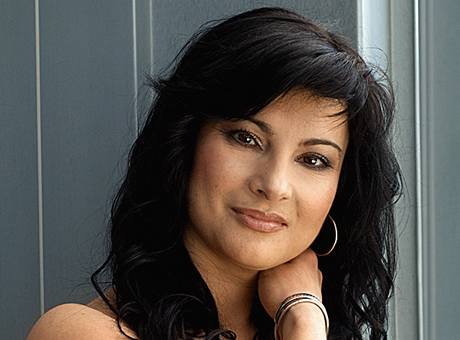
Horváthová’s vision for the museum is to grow and to continue expanding its collections.
“Next year will mark twenty years of our museum's existence,” she concludes. “We have the spirit of a warrior, and we hope no one breaks that in us.”
***
[Originally published on Tereza Bottman's Advocacy Project blog.]
Monday, August 23, 2010
Oh, You Black Bird, Carry My Letter: Czech Roma Holocaust Remembered
"Tensions in society are heightening. Perhaps the time will come again when we are sent away to designated areas. That is why during hardships we all must help one another."
Such was the sentiment that resounded during Catholic Mass, which was part the commemoration of Roma Holocaust on August 22, held at the site of a former concentration camp for Roma near the Czech town of Hodonín u Kunštátu.

Approximately 1300 Roma were imprisoned in the Hodonín camp between the years of 1942 and 1944. More than 200 prisoners, many of them children, died at the camp of disease and malnutrition. The majority were deported to Auschwitz, where more than 90 percent of all Czech Roma died at the hands of the Nazis.
"For the Roma gathered here, we ask for the strength to fight the evil marching along the same old tracks today," Father František Lízna said in his sermon. "We ask for blessings for the new generation."
"For the non-Roma here," the priest continued, "we ask that they are able to accept those different from them, and that they be willing to die for them, thus repaying the debt of the hatred they have harbored against their neighbors."
About 80 people attended the event, which consisted of a mass, commemoration ceremony at the mass gravesite of the Roma victims, and an opening of a Museum of Roma Culture exhibition entitled Roma Genocide, displayed inside the only original building left standing.

"We share the pain, injustice, and arbitrary treatment as well as the feeling of being excluded from society, occurring still today," said Pavel Fried, head of the Jewish Community in the city of Brno during his speech, drawing a parallel between the experience of the Roma in Czech society and that of the Jews.
Fried said he hoped that the presence of the members of the Jewish community would help encourage the Romani community "to continue to find the strength to persevere in fighting discrimination."
"The suffering that occurred seventy years ago is continuing today," said Jan Munk, director of the Terezín concentration camp. "It connects us and creates for us a joint responsibility for things to come."

Activist Karel Holomek of the Society of Roma in Moravia, who is the Ambassador for the Czech Presidency of the Decade of Roma Inclusion, expressed his disapproval and dismay at the political situation today.
"I always speak at this ceremony about the present situation in relation to the past, and I am troubled by what is currently happening," Holomek said, criticizing the Prime Minister's new human rights advisor appointee, calling the choice "a danger to the development of democracy."
Jana Horváthová, director of the Museum of Roma Culture, told the press at the event that very few people are aware of the Roma Holocaust. For that reason, the Czech Ministry of Education plans to build an educational center at the former camp where researchers and schools can study the Roma Holocaust. Šimon Mastný of the ministry said that the project is important for the ministry and that he hoped the ministry will continue its support for the project.

Before the candles, flowers and, in the Jewish tradition, stones were ceremoniously laid on the mass grave memorial, moving many of those present to tears, singer Zlata Pouličková performed a song, In Auschwitz there is a Great House, written by Růžena Danielová, a Czech Romani Holocaust survivor. The first two stanza of the song are as follows:
In Auschwitz there is a great house
And there my husband is imprisoned
He sits and sits and laments
And thinks about me
Oh, you black bird!
Carry my letter!
Carry it to my wife
For I am jailed in Auschwitz


***
[Originally published on Tereza Bottman's Advocacy Project blog]
Such was the sentiment that resounded during Catholic Mass, which was part the commemoration of Roma Holocaust on August 22, held at the site of a former concentration camp for Roma near the Czech town of Hodonín u Kunštátu.

Approximately 1300 Roma were imprisoned in the Hodonín camp between the years of 1942 and 1944. More than 200 prisoners, many of them children, died at the camp of disease and malnutrition. The majority were deported to Auschwitz, where more than 90 percent of all Czech Roma died at the hands of the Nazis.
"For the Roma gathered here, we ask for the strength to fight the evil marching along the same old tracks today," Father František Lízna said in his sermon. "We ask for blessings for the new generation."
"For the non-Roma here," the priest continued, "we ask that they are able to accept those different from them, and that they be willing to die for them, thus repaying the debt of the hatred they have harbored against their neighbors."
About 80 people attended the event, which consisted of a mass, commemoration ceremony at the mass gravesite of the Roma victims, and an opening of a Museum of Roma Culture exhibition entitled Roma Genocide, displayed inside the only original building left standing.

"We share the pain, injustice, and arbitrary treatment as well as the feeling of being excluded from society, occurring still today," said Pavel Fried, head of the Jewish Community in the city of Brno during his speech, drawing a parallel between the experience of the Roma in Czech society and that of the Jews.
Fried said he hoped that the presence of the members of the Jewish community would help encourage the Romani community "to continue to find the strength to persevere in fighting discrimination."
"The suffering that occurred seventy years ago is continuing today," said Jan Munk, director of the Terezín concentration camp. "It connects us and creates for us a joint responsibility for things to come."

Activist Karel Holomek of the Society of Roma in Moravia, who is the Ambassador for the Czech Presidency of the Decade of Roma Inclusion, expressed his disapproval and dismay at the political situation today.
"I always speak at this ceremony about the present situation in relation to the past, and I am troubled by what is currently happening," Holomek said, criticizing the Prime Minister's new human rights advisor appointee, calling the choice "a danger to the development of democracy."
Jana Horváthová, director of the Museum of Roma Culture, told the press at the event that very few people are aware of the Roma Holocaust. For that reason, the Czech Ministry of Education plans to build an educational center at the former camp where researchers and schools can study the Roma Holocaust. Šimon Mastný of the ministry said that the project is important for the ministry and that he hoped the ministry will continue its support for the project.

Before the candles, flowers and, in the Jewish tradition, stones were ceremoniously laid on the mass grave memorial, moving many of those present to tears, singer Zlata Pouličková performed a song, In Auschwitz there is a Great House, written by Růžena Danielová, a Czech Romani Holocaust survivor. The first two stanza of the song are as follows:
In Auschwitz there is a great house
And there my husband is imprisoned
He sits and sits and laments
And thinks about me
Oh, you black bird!
Carry my letter!
Carry it to my wife
For I am jailed in Auschwitz


***
[Originally published on Tereza Bottman's Advocacy Project blog]
Friday, August 13, 2010
When You Write About Us: A Dispatch from a Village on the Margins
"Me, me! Now it's my turn!" the local kids clamor to try my cell phone camera, taking pictures of each other, of me, of their fingers in front of the lens.
"What's your name? Do you have kids? Is he your husband?" they ask, surrounding me and gesturing toward the man with whom I arrived here.

[children who greeted us upon our arrival in Letanovce]
It's drizzling. The muddy ground throughout the village doesn't bother me. I have traveled more than ten hours to this place from Prague by bus and car, prepared, wearing my reliable pair of enclosed leather shoes. Meanwhile, the mud splatters all over my colleague's feet in sandals, reaching up between his toes. He mutters, admonishing himself for dressing as if this were his first time here.
"To understand the Roma in the Czech Republic, you have to visit a Romani settlement in Slovakia," my fellowship colleague told me when he invited me along on his annual pilgrimage to the settlement of Letanovce to visit a family he befriended ten years ago when he began working in the arena of Roma rights.
Many, if not the majority, of Romani families who live in the Czech Republic now, migrated there from rural Slovakia sometime between World War II and the present day.
According to Czech Radio's article on the history of the Roma minority, after the war, during which more than 90 percent of Czech Roma were killed by the Nazis, "Roma from settlements in Eastern Slovakia started to migrate to the evacuated Czech frontier regions and were dispersed as a light work force throughout the industrial areas of Bohemia and Moravia," the two regions that make up the Czech Republic.
A 1958 law, the Czech Radio article continues, mandated migrating peoples to settle down permanently "where they were assigned as a work force, without regard to the separation of families. In 1965, another law was passed concerning the procedure of dispersing the gypsy population, through which Roma from eastern Slovakian Romani villages had to move to Bohemia to work."
The migration to the Czech Republic continues today, tied to people's search for work, better living conditions, and reunification with families.

[Letanovce panorama]
There are between 700 and 800 socially isolated Romani settlements in Slovakia, which, together with the Czech Republic, made up Czechoslovakia until the peaceful split in 1993. These settlements tend to have disproportionately high unemployment rates of 90 to 100%, and lack basic services such as running water, sewers, electricity, gas or garbage collection. Letanovce, where I am visiting, fits this profile to a tee.
The approximately 700 local residents live in one-room log cabins, burn wood for heat, carry their water in buckets from a well at the bottom of the hill, and use a latrine or the adjacent tall green weeds as bathrooms.
We are invited in to the larger-than-the-local-norm two-room cabin of the family with whom we will be staying. They did not expect us. We had no way of contacting them, although several residents do have cell phones, some even with internet service. The challenge, I learn, is charging electronic items, as there is no electricity in this community. A few residents have small, six-inch televisions, which run on car batteries charged for a fee in town.
We bring in our gifts: food, second-hand clothes, toys and some odd household items like wash basins and dishes. We sit and crack open the pear brandy we had brought, toasting with shot glasses. Then it is quiet.
I feel awkward, my privilege so blatant here, wondering how to bridge the chasm between my life experience and that of the locals'.
The family slowly begins to unravel old stories from my colleague's past visits, updating us on the changes in the community.

[Magda's family and neighbors. We stayed at her sister's and mother's house.]
Many families migrated to the UK for work, then after two or three years returned back, because even there, work was hard to come by.
"After two years in England I honestly did not want to come back," one of the women whose house we are in tells me. True, her husband worked twelve-hour shifts six days a week at a sausage factory for very little pay, but it was work. And they had electricity and plumbing. But the bills kept coming and the work slowly dried up due to the recession.
Before it gets dark, we decide to take a walk around the village.
The residents come out into the rain to take a look at us. We greet everyone, the children forming our entourage.
I ask the children what they do for fun. Some shrug their shoulders, others say they play with toys or go swimming in the nearby river. Some try out the English they learned while living abroad: "Do you speak English?" and "How are you?"
Although Slovak and Czech are mutually intelligible, with some children there is a bit of a language barrier. The children all speak Romani at home, some of the younger ones don't even understand Slovak when they first start school, our host tells me. That is why bilingual Romani educational assistants are key to helping the students transition and be successful in school. However, these children have no such assistants where they go to school.
Our host worked as a teacher's assistant for several months, but got paid very little, and still of her own initiative did extra work outside her working hours. For instance, she gathered the children in the village and personally walked them to school 3 kilometers from the settlement. Unfortunately, her contract was never signed, and, in the end, her social benefits were cut because she'd had an income, no matter how inadequate to sustain the family.
"I would be so happy working as a classroom assistant. That work speaks to me," she said. "But when I have approached the school, which currently does not have any Roma working there, they have always told me they do not have any positions open."
"The walk to town is about a half-hour and most mothers do not have money for the bus or for lunch. We don't have fridges here, so it is hard for us to give our kids snacks early in the morning because over night, the food would spoil," she says, describing the barriers that parents here face when it comes to their children's education.

Most Romani children in the community attend a "practical," formerly special education school. Placement of Romani children, whether special needs or not, in such schools is common practice across Europe. Romani children, based on a psychological evaluation, are many more times likely to be placed in "practical schools" than white children and are overrepresented in such institutions, sometimes comprising the entire population of such schools. The results are segregation, lower-quality education and less opportunity for success in further schooling or employment.
In 2007, the European Court of Human Rights ruled that this pattern of segregation violated nondiscrimination protections in the European Convention on Human Rights. However, Roma continue to be assigned to these schools in disproportionate numbers.
"What subjects do you like in school?" I ask. The children shout over each other with excitement: "Reading! Writing! Math! Social Studies!"
As we chat while walking outside, I hear growling and yapping. Out of the corner of my eye I see a small dog charging at me, and before I know it, I feel it sinking its needly claws and teeth into the back of my thigh, ripping a large hole in my pants. The dog retreats as fast as it came.
I'm bleeding, but no one seems concerned. Only my travel partner from my fellowship organization Dženo half-jokes: "Hope the dog wasn't rabid."
The girls tell me the dog bites them too sometimes. Later that night, I sneakily dip my fingers into my shot glass and spread some pear brandy we are drinking onto the bite wound to disinfect it.
"I am ashamed," our host confesses, half-whispering, when she shows me where I will be sleeping. It is the family bed, big enough for four or five people. I tell her she has nothing to be ashamed of, but her sentiment deepens the discomfort I already feel about invading the family's privacy.
The bedroom is beautifully decorated with flowers, tapestries and chachkis lining the shelves. I will be sharing the big bed with the children, the parents unfold a mattress and place it on the floor where they will sleep.

In 2003, construction on a new apartment complex, financed by the town, state and European Union, began several kilometers from the current location of the settlement. The idea was moving the families to another location and leveling the place which many consider an eyesore in such a picturesque area favored by tourists. Families with permanent residency would be able to apply to relocate to the new apartment complex even more distant from the center of the town. No worries, the apartment complex would also have a school and a store on location.
The protests from the neighboring majority community that this project unleashed ranged from petitions to threats to the mayor that if he proceeds with the plan, an anonymous, angry local would poison the pristine rivers in the area with mercury. A skull was even found on the construction site with a letter threatening the mayor would be murdered for going through with this plan.
As of today, new buildings have not yet been completed. When they are ready, the problem is that many of those in the settlement will not qualify to move in, because they lack permanent residency status in Letanovce. Also, the new living conditions will require paying for rent, electricity and water bills, a practice many families are not used to and for which they have very limited means, considering their prohibitively high unemployment rate.
When the village wakes up the next day, we are all more comfortable with each other. I play and joke with the children, who teach me card games and sing, accompanied by a boy on a drum set in the wood shed.
We take a walk in Slovakian Paradise, a mountainous, forested nature reserve nearby. The kids go swimming there. They pick wild raspberries along the way for me.
"Do you ever fish in this river?" I ask the nine-year-old girl who has become my constant companion.
"No, we are rich," she replies. "We have been to England. We buy smoked fish at the store."

When we return, a dozen men from the settlement have their bags packed and are headed for the train. They found work all the way in Prague, ten hours away. Ten days in a row they will work construction, not knowing whether they will get paid. Temporary workers like these men, employed under the table so as not to lose their social benefits, are easy targets for companies that profit from their cheap labor. If the boss doesn't pay them, the laborers have almost no leverage to demand their salary.
"We get visitors once in a while, from Brussels and such places. Whoever comes, always needs to write something about us, it seems," says the host as we gather in her kitchen.
My colleague and I freeze up for a bit. We, too, are those visitors the woman had just described. Here one day, gone the next, and what remains are perhaps a few toys or items of clothing and an article about this community, floating about somewhere in ether.
"When you write about us," our host tells me softly, "say that we want help. We don't want to live like this anymore." So I pass on her words, thankful for the locals' generosity and richer for all that they had taught me, so essential for the work still ahead.

[a picture the kids took during one of our cell phone photo sessions]
***
[Originally published on Tereza Bottman's Advocacy Project blog.]
"What's your name? Do you have kids? Is he your husband?" they ask, surrounding me and gesturing toward the man with whom I arrived here.

[children who greeted us upon our arrival in Letanovce]
It's drizzling. The muddy ground throughout the village doesn't bother me. I have traveled more than ten hours to this place from Prague by bus and car, prepared, wearing my reliable pair of enclosed leather shoes. Meanwhile, the mud splatters all over my colleague's feet in sandals, reaching up between his toes. He mutters, admonishing himself for dressing as if this were his first time here.
"To understand the Roma in the Czech Republic, you have to visit a Romani settlement in Slovakia," my fellowship colleague told me when he invited me along on his annual pilgrimage to the settlement of Letanovce to visit a family he befriended ten years ago when he began working in the arena of Roma rights.
Many, if not the majority, of Romani families who live in the Czech Republic now, migrated there from rural Slovakia sometime between World War II and the present day.
According to Czech Radio's article on the history of the Roma minority, after the war, during which more than 90 percent of Czech Roma were killed by the Nazis, "Roma from settlements in Eastern Slovakia started to migrate to the evacuated Czech frontier regions and were dispersed as a light work force throughout the industrial areas of Bohemia and Moravia," the two regions that make up the Czech Republic.
A 1958 law, the Czech Radio article continues, mandated migrating peoples to settle down permanently "where they were assigned as a work force, without regard to the separation of families. In 1965, another law was passed concerning the procedure of dispersing the gypsy population, through which Roma from eastern Slovakian Romani villages had to move to Bohemia to work."
The migration to the Czech Republic continues today, tied to people's search for work, better living conditions, and reunification with families.

[Letanovce panorama]
There are between 700 and 800 socially isolated Romani settlements in Slovakia, which, together with the Czech Republic, made up Czechoslovakia until the peaceful split in 1993. These settlements tend to have disproportionately high unemployment rates of 90 to 100%, and lack basic services such as running water, sewers, electricity, gas or garbage collection. Letanovce, where I am visiting, fits this profile to a tee.
The approximately 700 local residents live in one-room log cabins, burn wood for heat, carry their water in buckets from a well at the bottom of the hill, and use a latrine or the adjacent tall green weeds as bathrooms.
We are invited in to the larger-than-the-local-norm two-room cabin of the family with whom we will be staying. They did not expect us. We had no way of contacting them, although several residents do have cell phones, some even with internet service. The challenge, I learn, is charging electronic items, as there is no electricity in this community. A few residents have small, six-inch televisions, which run on car batteries charged for a fee in town.
We bring in our gifts: food, second-hand clothes, toys and some odd household items like wash basins and dishes. We sit and crack open the pear brandy we had brought, toasting with shot glasses. Then it is quiet.
I feel awkward, my privilege so blatant here, wondering how to bridge the chasm between my life experience and that of the locals'.
The family slowly begins to unravel old stories from my colleague's past visits, updating us on the changes in the community.

[Magda's family and neighbors. We stayed at her sister's and mother's house.]
Many families migrated to the UK for work, then after two or three years returned back, because even there, work was hard to come by.
"After two years in England I honestly did not want to come back," one of the women whose house we are in tells me. True, her husband worked twelve-hour shifts six days a week at a sausage factory for very little pay, but it was work. And they had electricity and plumbing. But the bills kept coming and the work slowly dried up due to the recession.
Before it gets dark, we decide to take a walk around the village.
The residents come out into the rain to take a look at us. We greet everyone, the children forming our entourage.
I ask the children what they do for fun. Some shrug their shoulders, others say they play with toys or go swimming in the nearby river. Some try out the English they learned while living abroad: "Do you speak English?" and "How are you?"
Although Slovak and Czech are mutually intelligible, with some children there is a bit of a language barrier. The children all speak Romani at home, some of the younger ones don't even understand Slovak when they first start school, our host tells me. That is why bilingual Romani educational assistants are key to helping the students transition and be successful in school. However, these children have no such assistants where they go to school.
Our host worked as a teacher's assistant for several months, but got paid very little, and still of her own initiative did extra work outside her working hours. For instance, she gathered the children in the village and personally walked them to school 3 kilometers from the settlement. Unfortunately, her contract was never signed, and, in the end, her social benefits were cut because she'd had an income, no matter how inadequate to sustain the family.
"I would be so happy working as a classroom assistant. That work speaks to me," she said. "But when I have approached the school, which currently does not have any Roma working there, they have always told me they do not have any positions open."
"The walk to town is about a half-hour and most mothers do not have money for the bus or for lunch. We don't have fridges here, so it is hard for us to give our kids snacks early in the morning because over night, the food would spoil," she says, describing the barriers that parents here face when it comes to their children's education.

Most Romani children in the community attend a "practical," formerly special education school. Placement of Romani children, whether special needs or not, in such schools is common practice across Europe. Romani children, based on a psychological evaluation, are many more times likely to be placed in "practical schools" than white children and are overrepresented in such institutions, sometimes comprising the entire population of such schools. The results are segregation, lower-quality education and less opportunity for success in further schooling or employment.
In 2007, the European Court of Human Rights ruled that this pattern of segregation violated nondiscrimination protections in the European Convention on Human Rights. However, Roma continue to be assigned to these schools in disproportionate numbers.
"What subjects do you like in school?" I ask. The children shout over each other with excitement: "Reading! Writing! Math! Social Studies!"
As we chat while walking outside, I hear growling and yapping. Out of the corner of my eye I see a small dog charging at me, and before I know it, I feel it sinking its needly claws and teeth into the back of my thigh, ripping a large hole in my pants. The dog retreats as fast as it came.
I'm bleeding, but no one seems concerned. Only my travel partner from my fellowship organization Dženo half-jokes: "Hope the dog wasn't rabid."
The girls tell me the dog bites them too sometimes. Later that night, I sneakily dip my fingers into my shot glass and spread some pear brandy we are drinking onto the bite wound to disinfect it.
"I am ashamed," our host confesses, half-whispering, when she shows me where I will be sleeping. It is the family bed, big enough for four or five people. I tell her she has nothing to be ashamed of, but her sentiment deepens the discomfort I already feel about invading the family's privacy.
The bedroom is beautifully decorated with flowers, tapestries and chachkis lining the shelves. I will be sharing the big bed with the children, the parents unfold a mattress and place it on the floor where they will sleep.

In 2003, construction on a new apartment complex, financed by the town, state and European Union, began several kilometers from the current location of the settlement. The idea was moving the families to another location and leveling the place which many consider an eyesore in such a picturesque area favored by tourists. Families with permanent residency would be able to apply to relocate to the new apartment complex even more distant from the center of the town. No worries, the apartment complex would also have a school and a store on location.
The protests from the neighboring majority community that this project unleashed ranged from petitions to threats to the mayor that if he proceeds with the plan, an anonymous, angry local would poison the pristine rivers in the area with mercury. A skull was even found on the construction site with a letter threatening the mayor would be murdered for going through with this plan.
As of today, new buildings have not yet been completed. When they are ready, the problem is that many of those in the settlement will not qualify to move in, because they lack permanent residency status in Letanovce. Also, the new living conditions will require paying for rent, electricity and water bills, a practice many families are not used to and for which they have very limited means, considering their prohibitively high unemployment rate.
When the village wakes up the next day, we are all more comfortable with each other. I play and joke with the children, who teach me card games and sing, accompanied by a boy on a drum set in the wood shed.
We take a walk in Slovakian Paradise, a mountainous, forested nature reserve nearby. The kids go swimming there. They pick wild raspberries along the way for me.
"Do you ever fish in this river?" I ask the nine-year-old girl who has become my constant companion.
"No, we are rich," she replies. "We have been to England. We buy smoked fish at the store."

When we return, a dozen men from the settlement have their bags packed and are headed for the train. They found work all the way in Prague, ten hours away. Ten days in a row they will work construction, not knowing whether they will get paid. Temporary workers like these men, employed under the table so as not to lose their social benefits, are easy targets for companies that profit from their cheap labor. If the boss doesn't pay them, the laborers have almost no leverage to demand their salary.
"We get visitors once in a while, from Brussels and such places. Whoever comes, always needs to write something about us, it seems," says the host as we gather in her kitchen.
My colleague and I freeze up for a bit. We, too, are those visitors the woman had just described. Here one day, gone the next, and what remains are perhaps a few toys or items of clothing and an article about this community, floating about somewhere in ether.
"When you write about us," our host tells me softly, "say that we want help. We don't want to live like this anymore." So I pass on her words, thankful for the locals' generosity and richer for all that they had taught me, so essential for the work still ahead.

[a picture the kids took during one of our cell phone photo sessions]
***
[Originally published on Tereza Bottman's Advocacy Project blog.]
Monday, August 9, 2010
In the face of racial tensions, a community finds strength in unity
It's dusk. An unknown car pulls in to the neighborhood and slowly approaches our small group talking on a tree-lined street in a neighborhood of modest wooden family homes and neatly kept picket-fenced yards. The atmosphere tenses.
"Why are they coming here?" one of the local men asks under his breath, his eyes never leaving the car coming toward us.
Suddenly I remember a reality I had forgotten while drinking tea and visiting with the locals in one of the resident family's backyards. We are in Bedřiška, a "socially excluded community" in northeastern Czech Republic, not far from a place where last year a molotov cocktail, thrown by neo-Nazis out of a car into an open bedroom window, almost killed a two-year-old Romani girl in her sleep.
The racially motivated attack left three of the house inhabitants injured and caused the little girl severe burns on 80 percent of her body. The attackers are currently on trial for attempted murder.
The car stops not more than five feet from us, the lights stay on, the engine idles for some time, clearly putting some in the group on alert.
"They must be lost," guesses one of the men.
Soon, a woman no one seems to know opens the car door and hurries past us without a greeting into a house a few doors down. The car drives away. Sense of relief.
The evening sky has a pleasant, summer glow, the birds chirp. A small dog accompanies us, playing with a toy. A group of teens walking toward us greets community activist Sri Kumar Vishwanathan, whom I am accompanying on his trip to Bedřiška today, with smiles.
They linger and exchange a few words about how they have been doing. Vishwanathan asks the youth if they would like a soccer field in their neighborhood, pointing at a large, lush green space on the other side of the road that could potentially be used for a field. The boys reply enthusiastically.
Vishwanathan asks the girls if they would play soccer, or what they prefer to do in their free time. The girls are much more shy than the boys and don't provide any answers readily. But in less than a year's time, the neighborhood should have a community center, for which they have pressed the city, completed.
The plans for the center are multifold. It would house afterschool activities for children, tutoring sessions, a meeting and performance space, and more.

[community activists in Bedřiška]
As we continue our way down the street, the locals tell of a recent case when someone in the neighborhood got hurt and the police were phoned, however the phone call from "that notorious location" was dismissed as a prank call and help was not dispatched until multiple calls were placed. The ambulance did arrive on the scene, but was very delayed.
My mind is still buzzing from the neighborhood association meeting I had just attended in Bedřiška. The group had been meeting for some time to advocate for the needs of the community's residents, but because they were not taken seriously by city hall, they decided to form an official association in May. Since then, their influence has grown, one of the members had told me.
"Now that we are official, they can't just brush us aside. They have to listen to us," he said.
"Bedřiška is an example of how a community can come together following a tragedy," Vishwanathan observed. "What happened could have taken on a negative path toward destruction, or gone in a positive direction toward cooperation."
Clearly, the latter is the case.
"We talk things through here," explains one of the association's leaders. "If there is a dispute among the neighbors, we try to sit down, talk and resolve it."
"Not everyone is on board yet. But we're working on it," she adds.
Deescalating conflict through mediation is a key strategy the association uses to build unity and prevent dangerous situations. The efforts are made all the more urgent, considering the wounds of racist violence in this community are still fresh.
Last March, an arson attack on a Romani family's home occurred in this very neighborhood. The perpetrator was a white neighbor from across the street.
As we make our way down the road, we cross paths with a family leaving their home. "Four months ago a molotov cocktail was thrown inside this family's house," Vishwanathan relates. "Their teenage daughter put out the fire and saved her relatives' lives."
"How is your daughter sleeping these days? Is she able to sleep?" Vishwanathan asks the mother.
The mother looks down and timidly shakes her head from side to side. The truth is clear. The family is still experiencing trauma, months after the incident.
"If the fire had spread, it could have burned a big part of the neighborhood down," says one of the local leaders. "People realized that what affects one family, affects us all. So we started working together."
In addition to mediating conflicts and advocating for space, funding, staff and supplies for tutoring and afterschool children's activities, the association organizes weekly clean-ups of the neighborhood. The group plans community-wide events such as movie screenings, games for children and performances that bring the neighborhood together.
The association also acts as a link between the residents and city hall when rental agreements or other legal documents and proceedings must be attended to. Sometimes archives have to be searched, letters written, errors exposed and fair treatment demanded.
In one case, for example, the association helped when a resident, who had paid all his back rent in full, was later unexpectedly alerted that he had an exorbitant outstanding debt to the city with no clear explanation of why these charges had been incurred.
The locals with whom I spent my evening also shared a story about taking a stand against a local drug dealer who ran a methamphetamine (or pervitin in Czech) lab in the neighborhood. As a result of their actions, the police arrested the drug dealer, making the neighborhood safer for the kids.
The community has a vision of creating a historical display explicating and simultaneously commemorating the neighborhood's history, closely tied to the region's steel mill industry. Bedřiška's wooden homes were built in the 1950s for the steel mill workers who had moved to the area for work.
Today, the unemployment rate among the Roma in the region is high, veering between 90 and 100 percent. One of the association's goals is to push for ways to employ the neighborhood's residents, for instance as construction workers or street cleaners, and while we were visiting Bedřiška, an arrangement was made to begin the process with an organization which Vishwanathan recommended.
"I started activism because I have children and grandchildren here, and I want everyone here to have a good future," a white woman, who is one of the leaders in the neighborhood tells me. "I like the Roma. We are different culturally, but as long as we can accept our differences and talk with each other openly, we get along."
Fighting for fair treatment and opportunity, however, does not come without a price, she says.
"I have lost old friends of twenty-five to thirty years over this," the activist tells me, describing how explosive associating across racial lines in the Czech Republic can be.
"When they said things like, 'You are betraying the white race,'" she continues, "that had to be the end of our friendship."
By the time our visit wraps up, it is late and the sun has long gone down. I am full of impressions. Images of resigned, dark-skinned "ghetto" inhabitants in graffiti-covered, bleak city landscapes of half-dilapidated buildings flash through my mind. Mainstream media are the modern-day myth-makers. Over selectively crafted, cliched, mass-produced myths, I prefer true stories, told by the people in the real world and in their own words.
***
[This article originally appeared on Tereza Bottman's Advocacy Project blog.]
"Why are they coming here?" one of the local men asks under his breath, his eyes never leaving the car coming toward us.
Suddenly I remember a reality I had forgotten while drinking tea and visiting with the locals in one of the resident family's backyards. We are in Bedřiška, a "socially excluded community" in northeastern Czech Republic, not far from a place where last year a molotov cocktail, thrown by neo-Nazis out of a car into an open bedroom window, almost killed a two-year-old Romani girl in her sleep.
The racially motivated attack left three of the house inhabitants injured and caused the little girl severe burns on 80 percent of her body. The attackers are currently on trial for attempted murder.
The car stops not more than five feet from us, the lights stay on, the engine idles for some time, clearly putting some in the group on alert.
"They must be lost," guesses one of the men.
Soon, a woman no one seems to know opens the car door and hurries past us without a greeting into a house a few doors down. The car drives away. Sense of relief.
The evening sky has a pleasant, summer glow, the birds chirp. A small dog accompanies us, playing with a toy. A group of teens walking toward us greets community activist Sri Kumar Vishwanathan, whom I am accompanying on his trip to Bedřiška today, with smiles.
They linger and exchange a few words about how they have been doing. Vishwanathan asks the youth if they would like a soccer field in their neighborhood, pointing at a large, lush green space on the other side of the road that could potentially be used for a field. The boys reply enthusiastically.
Vishwanathan asks the girls if they would play soccer, or what they prefer to do in their free time. The girls are much more shy than the boys and don't provide any answers readily. But in less than a year's time, the neighborhood should have a community center, for which they have pressed the city, completed.
The plans for the center are multifold. It would house afterschool activities for children, tutoring sessions, a meeting and performance space, and more.

[community activists in Bedřiška]
As we continue our way down the street, the locals tell of a recent case when someone in the neighborhood got hurt and the police were phoned, however the phone call from "that notorious location" was dismissed as a prank call and help was not dispatched until multiple calls were placed. The ambulance did arrive on the scene, but was very delayed.
My mind is still buzzing from the neighborhood association meeting I had just attended in Bedřiška. The group had been meeting for some time to advocate for the needs of the community's residents, but because they were not taken seriously by city hall, they decided to form an official association in May. Since then, their influence has grown, one of the members had told me.
"Now that we are official, they can't just brush us aside. They have to listen to us," he said.
"Bedřiška is an example of how a community can come together following a tragedy," Vishwanathan observed. "What happened could have taken on a negative path toward destruction, or gone in a positive direction toward cooperation."
Clearly, the latter is the case.
"We talk things through here," explains one of the association's leaders. "If there is a dispute among the neighbors, we try to sit down, talk and resolve it."
"Not everyone is on board yet. But we're working on it," she adds.
Deescalating conflict through mediation is a key strategy the association uses to build unity and prevent dangerous situations. The efforts are made all the more urgent, considering the wounds of racist violence in this community are still fresh.
Last March, an arson attack on a Romani family's home occurred in this very neighborhood. The perpetrator was a white neighbor from across the street.
As we make our way down the road, we cross paths with a family leaving their home. "Four months ago a molotov cocktail was thrown inside this family's house," Vishwanathan relates. "Their teenage daughter put out the fire and saved her relatives' lives."
"How is your daughter sleeping these days? Is she able to sleep?" Vishwanathan asks the mother.
The mother looks down and timidly shakes her head from side to side. The truth is clear. The family is still experiencing trauma, months after the incident.
"If the fire had spread, it could have burned a big part of the neighborhood down," says one of the local leaders. "People realized that what affects one family, affects us all. So we started working together."
In addition to mediating conflicts and advocating for space, funding, staff and supplies for tutoring and afterschool children's activities, the association organizes weekly clean-ups of the neighborhood. The group plans community-wide events such as movie screenings, games for children and performances that bring the neighborhood together.
The association also acts as a link between the residents and city hall when rental agreements or other legal documents and proceedings must be attended to. Sometimes archives have to be searched, letters written, errors exposed and fair treatment demanded.
In one case, for example, the association helped when a resident, who had paid all his back rent in full, was later unexpectedly alerted that he had an exorbitant outstanding debt to the city with no clear explanation of why these charges had been incurred.
The locals with whom I spent my evening also shared a story about taking a stand against a local drug dealer who ran a methamphetamine (or pervitin in Czech) lab in the neighborhood. As a result of their actions, the police arrested the drug dealer, making the neighborhood safer for the kids.
The community has a vision of creating a historical display explicating and simultaneously commemorating the neighborhood's history, closely tied to the region's steel mill industry. Bedřiška's wooden homes were built in the 1950s for the steel mill workers who had moved to the area for work.
Today, the unemployment rate among the Roma in the region is high, veering between 90 and 100 percent. One of the association's goals is to push for ways to employ the neighborhood's residents, for instance as construction workers or street cleaners, and while we were visiting Bedřiška, an arrangement was made to begin the process with an organization which Vishwanathan recommended.
"I started activism because I have children and grandchildren here, and I want everyone here to have a good future," a white woman, who is one of the leaders in the neighborhood tells me. "I like the Roma. We are different culturally, but as long as we can accept our differences and talk with each other openly, we get along."
Fighting for fair treatment and opportunity, however, does not come without a price, she says.
"I have lost old friends of twenty-five to thirty years over this," the activist tells me, describing how explosive associating across racial lines in the Czech Republic can be.
"When they said things like, 'You are betraying the white race,'" she continues, "that had to be the end of our friendship."
By the time our visit wraps up, it is late and the sun has long gone down. I am full of impressions. Images of resigned, dark-skinned "ghetto" inhabitants in graffiti-covered, bleak city landscapes of half-dilapidated buildings flash through my mind. Mainstream media are the modern-day myth-makers. Over selectively crafted, cliched, mass-produced myths, I prefer true stories, told by the people in the real world and in their own words.
***
[This article originally appeared on Tereza Bottman's Advocacy Project blog.]
Saturday, August 7, 2010
For Romani families in poverty, threat of forced removal of children by the state looms large
Members of nineteen families facing eviction file in to a small conference room. The multigenerational group listens intently as LifeTogether director Sri Kumar Vishwanathan describes the situation: his organization, in partnership with several private firms, was, at the last minute, able to secure eighteen apartments on the outskirts of town for families who have defaulted on rent, and are thus being forced to move out of a building in one of the city's "socially excluded Romani locations." The apartments offered to those present contain only bare walls, no appliances and insufficient facilities--a sink, but no shower or tub.

[Sri Kumar Vishwanathan, head of LifeTogether, meets with families facing eviction]
This particular community's unemployment rate stands at a shocking 100 percent, a phenomenon that is common in many of the poor Czech Romani enclaves. In order to survive, families often rely on money lenders who use unethical practices, charging exorbitant amounts of interest, thus forcing families into vicious cycles of poverty which are difficult to break.
As a result of their dire economic situation and deeply entrenched systemic discrimination, several families at the meeting have already had some of their children taken away by the state and at least four others are in danger of having their children placed into state care.
"The mothers were ashamed to say their children are under the threat of being removed from the family," Vishwanathan, who founded LifeTogether in the northeastern Czech town of Ostrava thirteen years ago, related to me in private after the meeting. "They feel they have failed. But it's not their fault."
"Czech Republic is number one in Europe," he continues, "in terms of having the highest rate of forced removal of children from Romani families and placed in state-run institutions."
Indeed, Human Rights Watch has found that the Czech Republic has the highest number of infants under the age of three forced into institutional care of all EU countries.
Vishwanathan's organization works to help prevent such practices, which have been criticized by the European Roma Rights Center and Amnesty International, among other human rights watchdogs. LifeTogether provides many services for the Romani community, including legal aid, counseling as well as help for children who run away from state foster care institutions.

[Sri Kumar Vishwanathan]
To truly remediate the situation, however, a systemic overhaul is long overdue. In its Survey on Children in Alternative Care, Eurochild, a network of organizations and individuals working across Europe to improve the quality of life of children, outlines seven steps by which European governments could prevent forced removal of children from families in poverty. Eurochild states:
Another Eurochild recommendation suggests that "the involvement of children, young people and their families is crucial, both in the decision- making processes affecting them directly and in the development of alternative care policies and services. They should therefore be empowered to participate in all stages of the care process and the EU should encourage the development of peer led groups of children, young people and parents with experience of care."
The European Roma Rights Center identifies the role of the social worker as key in addressing systemic discrimination, as social workers are those who determine whether a family is "definitively incapable of caring for a child." This decision is often driven by preconceived conceptions and a social worker's view of the Romani community. The Bratinka Report, a study discussed in the ERRC document, found this to be the case:
Because social workers' prejudices can ultimately lead to the break-up of a family, it is crucial that, as the organization Eurochild asserts, "all professionals working with and for children, including those in the education, health care, child protection and social work sectors, need high quality on-going training and supervision."
Furthermore, Eurochild advocates that risks of social exclusion associated with poverty must be reduced:
This year happens to be the EU Year for Combating Poverty and Social Exclusion, and in that regard, the Czech Republic has far to go. Considering the critical situation of the Romani population living in poverty, it is an abomination that the newly elected Czech government plans to cut social spending rather than invest in uplifting marginalized communities so they can live fearless, dignified lives.
"That's very big of you. You are noble people," Vishwanathan responds to one mother's offer to forgo her chance to move into the apartment offered by LifeTogether before the meeting with the families concludes. The mother wants to give a preference to a family in danger of having its children removed by the state. She says, "There are nineteen families and eighteen apartments. Of course I will give a family that needs it more a chance first. We, who have kids, know how it is."
Fortunately, following the eviction from an already long-neglected building for the poor, she and her children will be able to stay at her aunt's for now.
***
[This article originally appeared on Tereza Bottman's Advocacy Project bloge]

[Sri Kumar Vishwanathan, head of LifeTogether, meets with families facing eviction]
This particular community's unemployment rate stands at a shocking 100 percent, a phenomenon that is common in many of the poor Czech Romani enclaves. In order to survive, families often rely on money lenders who use unethical practices, charging exorbitant amounts of interest, thus forcing families into vicious cycles of poverty which are difficult to break.
As a result of their dire economic situation and deeply entrenched systemic discrimination, several families at the meeting have already had some of their children taken away by the state and at least four others are in danger of having their children placed into state care.
"The mothers were ashamed to say their children are under the threat of being removed from the family," Vishwanathan, who founded LifeTogether in the northeastern Czech town of Ostrava thirteen years ago, related to me in private after the meeting. "They feel they have failed. But it's not their fault."
"Czech Republic is number one in Europe," he continues, "in terms of having the highest rate of forced removal of children from Romani families and placed in state-run institutions."
Indeed, Human Rights Watch has found that the Czech Republic has the highest number of infants under the age of three forced into institutional care of all EU countries.
Vishwanathan's organization works to help prevent such practices, which have been criticized by the European Roma Rights Center and Amnesty International, among other human rights watchdogs. LifeTogether provides many services for the Romani community, including legal aid, counseling as well as help for children who run away from state foster care institutions.

[Sri Kumar Vishwanathan]
To truly remediate the situation, however, a systemic overhaul is long overdue. In its Survey on Children in Alternative Care, Eurochild, a network of organizations and individuals working across Europe to improve the quality of life of children, outlines seven steps by which European governments could prevent forced removal of children from families in poverty. Eurochild states:
EU member states should invest more in moving away from a child care system based on large institutions and move towards the provision of a range of integrated, family-based and community-based services.
Another Eurochild recommendation suggests that "the involvement of children, young people and their families is crucial, both in the decision- making processes affecting them directly and in the development of alternative care policies and services. They should therefore be empowered to participate in all stages of the care process and the EU should encourage the development of peer led groups of children, young people and parents with experience of care."
The European Roma Rights Center identifies the role of the social worker as key in addressing systemic discrimination, as social workers are those who determine whether a family is "definitively incapable of caring for a child." This decision is often driven by preconceived conceptions and a social worker's view of the Romani community. The Bratinka Report, a study discussed in the ERRC document, found this to be the case:
This report found that 38% of social workers felt that the main obstacle to better relationships were the "unsavoury characteristics of the Roma", that the Romani minority should attempt to adapt to the majority, that affirmative action programmes for the Roma were a waste of money and their influence negligible, and that it would be good to strike hard at Romany criminality and disregard for generally accepted norms. Forty-two percent of social workers felt that pro-active programmes for the Roma were an unfair privilege for one group of citizens. The ramifications of these perceptions may indeed correlate with the disproportionate representation of Roma children in institutions and necessarily question whether Romani families are given a just assessment of their rightful capacity to raise their own children.
Because social workers' prejudices can ultimately lead to the break-up of a family, it is crucial that, as the organization Eurochild asserts, "all professionals working with and for children, including those in the education, health care, child protection and social work sectors, need high quality on-going training and supervision."
Furthermore, Eurochild advocates that risks of social exclusion associated with poverty must be reduced:
The fight against child poverty must remain a key political priority of the EU. Social inequality denies children equal access to services and perpetuates the cycle of poverty. A strong political framework is required at EU level to ensure all member states put in place the necessary structural reforms to ensure all families have access to a minimum income and adequate services.
This year happens to be the EU Year for Combating Poverty and Social Exclusion, and in that regard, the Czech Republic has far to go. Considering the critical situation of the Romani population living in poverty, it is an abomination that the newly elected Czech government plans to cut social spending rather than invest in uplifting marginalized communities so they can live fearless, dignified lives.
"That's very big of you. You are noble people," Vishwanathan responds to one mother's offer to forgo her chance to move into the apartment offered by LifeTogether before the meeting with the families concludes. The mother wants to give a preference to a family in danger of having its children removed by the state. She says, "There are nineteen families and eighteen apartments. Of course I will give a family that needs it more a chance first. We, who have kids, know how it is."
Fortunately, following the eviction from an already long-neglected building for the poor, she and her children will be able to stay at her aunt's for now.
***
[This article originally appeared on Tereza Bottman's Advocacy Project bloge]
Wednesday, August 4, 2010
Honoring Pain and Loss, Urging Vigilance and Change on International Roma Holocaust Remembrance Day
On August 2nd, representatives and friends of the Romani and Sinti communities from Germany, Poland, Slovakia, and the Czech Republic gathered at Auschwitz to commemorate the International Roma Holocaust Remembrance Day.
The ceremony took place at the site of the so-called Zigeunerlager, or "Gypsy" Camp, where more than 23,000 Roma were imprisoned. The date marked the 66th anniversary of the liquidation of the "Gypsy Family Camp" at Auschwitz II-Birkenau on the night of August 2, 1944 when the Nazis killed 2,897 men, women, and children in the gas chambers. International Roma Holocaust (or, in Romani, Porajamos) Remembrance Day has been observed since 1994.

[Family at the International Roma Holocaust Remembrance Day commemoration at Auschwitz, photo by Tereza Bottman]
"I was a child when I visited this place for the first time," recalled Roman Kwiatkowski, Chairman of the Association of the Roma in Poland in his speech to the audience, which, aside from activists and Romani as well as majority community members, included religious figures and government officials.
"I came here with my mother," continued Kwiatkowski, "and I can still remember two things: the crumbling monument and my mother sobbing uncontrollably. I understood very little back then, I could not comprehend the symbolism of this place and the magnitude of the tragedy and suffering connected with it. However, I subconsciously felt how important it was, and concluding from its condition, how forgotten it must have been. A sense of mission was born in me then. From the beginning of my activity as a grown-up man and an activist for the Romani community, my aim has been to refill this place with proper meaning and importance."
The Monument of Roma and Sinti at the Auschwitz-Birkenau State Museum was built in 1973 and renovated in 1994. The plaque on the granite obelisk reads:

[Monument of Roma and Sinti at Auschwitz-Birkenau, photo credit Czech Radio]
The exact number of Roma who perished in the Holocaust is unknown, but historians estimate it to be between half- and 1.5 million people. More than 90% of Czech Roma died at the hand of the Nazis. Over 62% of Romani prisoners at Auschwitz came from Germany and Austria, 22% were brought from the Czech Republic, and the rest came from Poland.
To this day, Romani activists have been struggling to attain recognition and redress for the crimes committed by the Nazis against their community during WWII.
"Unfortunately our organization has come to understand that the Roma are not honored equally to other victims of the Nazi era in compensation efforts," said Čeněk Růžička, Chairman of the Committee for Compensation of Romani Holocaust in the Czech Republic. "It seems unbelievable that up to the present moment, compensations have not been completed, and, in contrast to the redress process regarding the property claims of Jews, compensations for Romani properties have not yet been started."
Růžička's organization is committed to continuing to advocate for Romani Holocaust victims. He says: "We will continue to ask for compensation of Romani assets and for the Roma to be present as equal partners in the dealings. The victims who remain alive have selected us to represent their rightful interests, and we want nothing more than to right this injustice."
The community representatives and Polish government officials who spoke at the event urged everyone present to remain vigilant and to continue to support the plight of the Roma who, as Gejza Adam of the Slovak Roma Coalition Party said, "have been striving to become equal members" of societies across Europe.
"Despite the fact that sixty years have passed since the tragedy," Adam said, "Romani communities in Europe have been suffering from the same negligence as always."

[Auschwitz Gate, photo by Tereza Bottman]
Poverty, alarming environmental and social conditions, as well as low social status are just some of the issues the Roma face, Adam said, taking a moment to criticize the current situation: "Financial aid distributed by the European resources that is aimed at helping the Roma improve their social status hardly ever gets to its addressees, meaning the Romani people themselves."
Drawing parallels between the importance of remembering the victims and the relevance of those memories today was a theme throughout the ceremony.
"Sixty-five years ago the Nazi ideology was conquered," said Růžička. "But, unfortunately, not its ideas. They appear again and again. So let us be watchful and uncompromising so that we do not lose control over them."
"It is our duty not only to inform and to spread the knowledge of these places and about the unimaginable crime committed on the Romani nation, a nation that was so categorically sentenced to death because of its race and ethnicity," said Kwiatkowski. "It would be tragic to belittle and forget the fact that Roma and Sinti were exterminated. We cannot allow such a situation to arise, because it is only one step from the consent for the repetition of the brutal practices that marked the history of Europe and the whole world in such a painful manner."

["Haunted" -- Auschwitz-Birkenau, photo by Tereza Bottman]
Adam concluded his speech with these powerful words:

[flowers to honor the victims, photo by Tereza Bottman]
***
A slide show of the August 2, 2010 ceremony can be seen here.
Those who understand Romani or Slovak can watch a short documentary by the Romani Press Agency about the Romani Holocaust here.

[Romani boys at the commemoration, photo by Tereza Bottman]
More photos from the ceremony:


***
[This article originally appeared on Tereza Bottman's Advocacy Project blog]
The ceremony took place at the site of the so-called Zigeunerlager, or "Gypsy" Camp, where more than 23,000 Roma were imprisoned. The date marked the 66th anniversary of the liquidation of the "Gypsy Family Camp" at Auschwitz II-Birkenau on the night of August 2, 1944 when the Nazis killed 2,897 men, women, and children in the gas chambers. International Roma Holocaust (or, in Romani, Porajamos) Remembrance Day has been observed since 1994.

[Family at the International Roma Holocaust Remembrance Day commemoration at Auschwitz, photo by Tereza Bottman]
"I was a child when I visited this place for the first time," recalled Roman Kwiatkowski, Chairman of the Association of the Roma in Poland in his speech to the audience, which, aside from activists and Romani as well as majority community members, included religious figures and government officials.
"I came here with my mother," continued Kwiatkowski, "and I can still remember two things: the crumbling monument and my mother sobbing uncontrollably. I understood very little back then, I could not comprehend the symbolism of this place and the magnitude of the tragedy and suffering connected with it. However, I subconsciously felt how important it was, and concluding from its condition, how forgotten it must have been. A sense of mission was born in me then. From the beginning of my activity as a grown-up man and an activist for the Romani community, my aim has been to refill this place with proper meaning and importance."
The Monument of Roma and Sinti at the Auschwitz-Birkenau State Museum was built in 1973 and renovated in 1994. The plaque on the granite obelisk reads:
“Memorial place of Roma of the concentration camp in Auschwitz - Birkenau. Thousands of men, women and children imprisoned, tortured victims of German Fascism, died in this concentration camp in Birkenau – cruelly tormented, murdered and gassed. Funded by the Roma Association in Germany 1973 Rose O. Bamberger”

[Monument of Roma and Sinti at Auschwitz-Birkenau, photo credit Czech Radio]
The exact number of Roma who perished in the Holocaust is unknown, but historians estimate it to be between half- and 1.5 million people. More than 90% of Czech Roma died at the hand of the Nazis. Over 62% of Romani prisoners at Auschwitz came from Germany and Austria, 22% were brought from the Czech Republic, and the rest came from Poland.
To this day, Romani activists have been struggling to attain recognition and redress for the crimes committed by the Nazis against their community during WWII.
"Unfortunately our organization has come to understand that the Roma are not honored equally to other victims of the Nazi era in compensation efforts," said Čeněk Růžička, Chairman of the Committee for Compensation of Romani Holocaust in the Czech Republic. "It seems unbelievable that up to the present moment, compensations have not been completed, and, in contrast to the redress process regarding the property claims of Jews, compensations for Romani properties have not yet been started."
Růžička's organization is committed to continuing to advocate for Romani Holocaust victims. He says: "We will continue to ask for compensation of Romani assets and for the Roma to be present as equal partners in the dealings. The victims who remain alive have selected us to represent their rightful interests, and we want nothing more than to right this injustice."
The community representatives and Polish government officials who spoke at the event urged everyone present to remain vigilant and to continue to support the plight of the Roma who, as Gejza Adam of the Slovak Roma Coalition Party said, "have been striving to become equal members" of societies across Europe.
"Despite the fact that sixty years have passed since the tragedy," Adam said, "Romani communities in Europe have been suffering from the same negligence as always."

[Auschwitz Gate, photo by Tereza Bottman]
Poverty, alarming environmental and social conditions, as well as low social status are just some of the issues the Roma face, Adam said, taking a moment to criticize the current situation: "Financial aid distributed by the European resources that is aimed at helping the Roma improve their social status hardly ever gets to its addressees, meaning the Romani people themselves."
Drawing parallels between the importance of remembering the victims and the relevance of those memories today was a theme throughout the ceremony.
"Sixty-five years ago the Nazi ideology was conquered," said Růžička. "But, unfortunately, not its ideas. They appear again and again. So let us be watchful and uncompromising so that we do not lose control over them."
"It is our duty not only to inform and to spread the knowledge of these places and about the unimaginable crime committed on the Romani nation, a nation that was so categorically sentenced to death because of its race and ethnicity," said Kwiatkowski. "It would be tragic to belittle and forget the fact that Roma and Sinti were exterminated. We cannot allow such a situation to arise, because it is only one step from the consent for the repetition of the brutal practices that marked the history of Europe and the whole world in such a painful manner."

["Haunted" -- Auschwitz-Birkenau, photo by Tereza Bottman]
Adam concluded his speech with these powerful words:
"I am truly sorry to dare raise your awareness (about the problems today) at this particular place, but I hope the ashes and unmarked graves of the Holocaust victims can become the sacred ground from which human hope, tolerance and moral courage will rise in order to help us--Romani people--become valid members of societies that value human rights and equality above all."

[flowers to honor the victims, photo by Tereza Bottman]
***
A slide show of the August 2, 2010 ceremony can be seen here.
Those who understand Romani or Slovak can watch a short documentary by the Romani Press Agency about the Romani Holocaust here.

[Romani boys at the commemoration, photo by Tereza Bottman]
More photos from the ceremony:


***
[This article originally appeared on Tereza Bottman's Advocacy Project blog]
Tuesday, July 27, 2010
Seizing the Opportunity: An Interview with Romani News Anchor Richard Samko
"My work has become my hobby,” says Richard Samko, the second ever Romani news anchor on Czech Television. “The work is colorful and diverse. It’s also an adrenaline rush, and I like that.”

[Richard Samko, photo credit Czech Radio]
Samko has worked in the field of journalism for eleven years as a reporter, news anchor and more recently host of Events and Commentary, a nightly program featuring news analysis and political commentary.
In the late 1990s, the Dženo Association introduced Samko to the world of journalism in a training designed to bring up a new generation of Romani reporters.
Samko is a pioneer, with only Ondřej Giňa, Jr., the first news anchor of Romani background in the Czech Republic, having blazed the trail before him. Samko’s drive, energy and passion for his work in the news media underscore our conversation.
“I stuck with it for years, working my way up, because I wanted to make it far," says Samko. "The opportunity was something a person gets only once in a lifetime. To get to work in Czech Television is huge; it’s power.”
Samko has covered topics as wide-ranging as immigration, problems inside the police force, right-wing extremism, traffic law, housing issues and unemployment. He has also taken part in producing documentaries, an interest he would like to pursue in greater depth.
One documentary on which Samko collaborated was The Saga of the Roma (Sága Romů), a film examining the changes in the Romani community and its relationship to the majority population during the second half of the 20th century. Samko confesses filmmaking is his dream.
"When I worked on The Saga, filmmaking really grabbed me. I saw that the work was more creative," Samko recalls. "I then made a few short documentaries myself."
"I would like to make a film that is Roma-themed,” Samko continues. “I can see that as the most realistic undertaking for me; a topic which I understand the best and can say the most about."
One of the most powerful aspects of being so visible in the media is Samko’s ability to inspire Romani children, who look up to him as a role model from their own ranks.
Whenever Samko’s hectic schedule allows it, Samko travels to Romani cultural festivals to act as master of ceremonies and to speak to the children.
"I want the children to see a positive example of what is possible to achieve," says Samko.
One of his projects is a program called Fledglings (Ptáčata), in which a television crew follows a group of second-graders, many of them Romani, as they learn to become camera operators, reporters and news anchors while documenting their own lives.

Samko is a visionary. He recognizes the potential in his community and advocates for the skills of those newly trained in his field to be harnessed. Once funding for Dženo’s Romani station Radio Rota is renewed and the broadcast expanded via digital satellite technology, Samko, who would work with the station in advisory capacity, sees an enormous opportunity for a new generation of journalists.
“Radio Rota should be funded,” asserts Samko, “because it would serve as a base for those who have started on a path towards a career in journalism. There is a potential here that should be developed further. In mainstream television, where I work, there is no time for on-the-job training or mentoring. New journalists have to be ready to start working at a professional level. That’s where media organizations such as Dženo and Radio Rota come in.”
Another role that Radio Rota could fulfill is that of enabling journalists from the majority population to access experiences of the members of Romani community whose issues would be of interest because they ‘affect the entire country,’ as Samko says.
“Mainstream media could draw on the work of Romani journalists reporting for Radio Rota,” Samko continues, “because they tend to be the ones with access to the Romani community, something the average Czech reporter doesn’t have.”
In addition to providing information mainstream journalists could draw on as well as hands-on experience to young Romani reporters, Radio Rota, because the Czech Republic is in the center of Europe, could serve as the heart of Romani newscasting, says Samko.
“Radio Rota could broadcast news programming from around the world,” Samko envisions. “We know journalists in Bulgaria, Hungary, Russia, Poland, etc. We know people everywhere. In all these places there are journalists who would contribute Romani-themed programs. The station could be a pan-European showcase.”
To close, Samko urges: “I want my fellow Roma to persevere in doing what they enjoy despite obstacles they may encounter. The opportunities are there. It may take a few years. There will be a few years of waiting, but then the chance to get to a better place will arrive and they will be able to fulfill their dreams.”
“And as far as the majority community is concerned,” Samko concludes, “more tolerance is necessary. There needs to be more room and less judgement of people based on their looks or minority status. Minorities must be given a chance.”
[This article originally appeared on Tereza Bottman's Advocacy Project blog]
[Richard Samko, photo credit Czech Radio]

Samko has worked in the field of journalism for eleven years as a reporter, news anchor and more recently host of Events and Commentary, a nightly program featuring news analysis and political commentary.
In the late 1990s, the Dženo Association introduced Samko to the world of journalism in a training designed to bring up a new generation of Romani reporters.
Samko is a pioneer, with only Ondřej Giňa, Jr., the first news anchor of Romani background in the Czech Republic, having blazed the trail before him. Samko’s drive, energy and passion for his work in the news media underscore our conversation.
“I stuck with it for years, working my way up, because I wanted to make it far," says Samko. "The opportunity was something a person gets only once in a lifetime. To get to work in Czech Television is huge; it’s power.”
Samko has covered topics as wide-ranging as immigration, problems inside the police force, right-wing extremism, traffic law, housing issues and unemployment. He has also taken part in producing documentaries, an interest he would like to pursue in greater depth.
One documentary on which Samko collaborated was The Saga of the Roma (Sága Romů), a film examining the changes in the Romani community and its relationship to the majority population during the second half of the 20th century. Samko confesses filmmaking is his dream.
"When I worked on The Saga, filmmaking really grabbed me. I saw that the work was more creative," Samko recalls. "I then made a few short documentaries myself."
"I would like to make a film that is Roma-themed,” Samko continues. “I can see that as the most realistic undertaking for me; a topic which I understand the best and can say the most about."
One of the most powerful aspects of being so visible in the media is Samko’s ability to inspire Romani children, who look up to him as a role model from their own ranks.
Whenever Samko’s hectic schedule allows it, Samko travels to Romani cultural festivals to act as master of ceremonies and to speak to the children.
"I want the children to see a positive example of what is possible to achieve," says Samko.
One of his projects is a program called Fledglings (Ptáčata), in which a television crew follows a group of second-graders, many of them Romani, as they learn to become camera operators, reporters and news anchors while documenting their own lives.

Samko is a visionary. He recognizes the potential in his community and advocates for the skills of those newly trained in his field to be harnessed. Once funding for Dženo’s Romani station Radio Rota is renewed and the broadcast expanded via digital satellite technology, Samko, who would work with the station in advisory capacity, sees an enormous opportunity for a new generation of journalists.
“Radio Rota should be funded,” asserts Samko, “because it would serve as a base for those who have started on a path towards a career in journalism. There is a potential here that should be developed further. In mainstream television, where I work, there is no time for on-the-job training or mentoring. New journalists have to be ready to start working at a professional level. That’s where media organizations such as Dženo and Radio Rota come in.”
Another role that Radio Rota could fulfill is that of enabling journalists from the majority population to access experiences of the members of Romani community whose issues would be of interest because they ‘affect the entire country,’ as Samko says.
“Mainstream media could draw on the work of Romani journalists reporting for Radio Rota,” Samko continues, “because they tend to be the ones with access to the Romani community, something the average Czech reporter doesn’t have.”
In addition to providing information mainstream journalists could draw on as well as hands-on experience to young Romani reporters, Radio Rota, because the Czech Republic is in the center of Europe, could serve as the heart of Romani newscasting, says Samko.
“Radio Rota could broadcast news programming from around the world,” Samko envisions. “We know journalists in Bulgaria, Hungary, Russia, Poland, etc. We know people everywhere. In all these places there are journalists who would contribute Romani-themed programs. The station could be a pan-European showcase.”
To close, Samko urges: “I want my fellow Roma to persevere in doing what they enjoy despite obstacles they may encounter. The opportunities are there. It may take a few years. There will be a few years of waiting, but then the chance to get to a better place will arrive and they will be able to fulfill their dreams.”
“And as far as the majority community is concerned,” Samko concludes, “more tolerance is necessary. There needs to be more room and less judgement of people based on their looks or minority status. Minorities must be given a chance.”
[This article originally appeared on Tereza Bottman's Advocacy Project blog]
Friday, July 23, 2010
Matters of the Heart: A conversation with Romani radio personality Iveta Demeterová
"It was when I started here in 2002 that my big love affair with this work began,” says Iveta Demeterová, Director of Programming at Radio Rota, the first Romani internet station in the Czech Republic, founded and operated by the Dženo Association.
“None of us at the station took the work as a mere job; we considered it our life’s mission and our passion,” recalls Demeterová. “For us, it was a matter of the heart. None of us ever looked at the clock; we worked until we were happy with what we produced.”
 “
“
[Iveta Demeterová, photo by Tereza Bottman]
During Radio Rota’s heyday between 2002 and 2006, the station attracted tens of thousands of listeners from the Czech Republic and around the world each month. Radio Rota aired news, public affairs programming, talk shows, and cultural programs in three languages: Czech, English and Romani. The radio presented organizations to which the community could turn for help.
The hope is that if enough funding is raised, the station will soon resume broadcasting, this time in digital satellite format, reaching listeners in more languages, across as much as three quarters of Europe.
“The station served as a a link, connecting Roma who before the year 2000 immigrated to Canada, England, Belgium, Netherlands, Australia, New Zealand,” explains Demeterová. “We provided a way for them to communicate together, obtain information from us, and, in return, pass on information to us about how they were doing abroad; how they were faring in areas of housing, education, work; how they were perceived there and whether they had problems based on the color of their skin.”
The audience also included the majority population.
“Our motto was: ‘Radio about and for, but not only for the Roma,’” says Demeterová, who, as of September, will also be the new Director of Romani programming on Czech Radio, a publicly funded station with a weekly listenership of nearly 3 million.
“I was most thrilled by the fact that there was such great cooperation between the station and its listeners," beams Demeterová. "The telephone rang off the hook. We received so many emails, it was a challenge to respond to all of them.“

One of the regular programs was a show called Voicemail. “The messages that people sent to each other through us were incredible,“ remembers Demeterová. “People called in to confess their love for each other, to make birthday wishes, to express regrets that they cannot be there to celebrate their grandparents‘ anniversaries.“
Radio Rota even brought people together; not only couples, but friends or relatives who had not been able to find each other for years.
“I did not live my own life doing this work,“ Demeterová confesses. “I lived the lives of the others; the listeners, because I was their fan. I provided advice and contacts for organizations that could help them.“
During the time of campaigns, politicians were regularly invited to the Radio Rota studio to be interviewed and to discuss their platforms. Informally, many of them expressed their support for the station, but in the end, their words were mostly empty promises, says Demeterová.
“Funding was always an issue,” she explains. “The station was built for money from abroad. We asked the Ministry of Culture for funding, and we received it twice. We were glad we received the support, even though it was less than the amount we had requested.“
“We had to prioritize,“ says Demeterová. “There were times when we were only able to pay the bills and the contractors, still we continued working. We weren’t thinking about ourselves; we were thinking about the listeners who were waiting for the services the station provides.“
The importance of independent, minority-run media such as Radio Rota cannot be overstated. Demeterová says the station played a unique role in Czech society in that it emphasized a positive image of the Romani community.
“If the majority population truly wants to have a multicultural society and to be a lawful member of the European Union,“ Demeterová asserts, “if they want tolerance to preside over this land, one way to achieve this is [for the majority and the Roma] to continue getting to know each other. Radio Rota could be a vehicle to open the way for that process.“
Several years later, fans are still writing in, wondering what is happening with the radio station.
“People are still waiting for something to happen, hoping that the radio will continue,” says Demeterová.

The station provided not only information and entertainment, but also a sense of community as well as pride.
“When the radio was created, the community felt part of the experience,” Demeterová explains. “The people felt that they belonged there: ‘We, too, have our own radio station now.’”
“When the listeners wrote in, they did not call it ‘your radio;’” she concludes.“They called it ‘our radio.’ We gave them something to feel proud of.”
***
[This article originally appeared on Tereza Bottman's Advocacy Project blog]
“None of us at the station took the work as a mere job; we considered it our life’s mission and our passion,” recalls Demeterová. “For us, it was a matter of the heart. None of us ever looked at the clock; we worked until we were happy with what we produced.”
 “
“ 
[Iveta Demeterová, photo by Tereza Bottman]
During Radio Rota’s heyday between 2002 and 2006, the station attracted tens of thousands of listeners from the Czech Republic and around the world each month. Radio Rota aired news, public affairs programming, talk shows, and cultural programs in three languages: Czech, English and Romani. The radio presented organizations to which the community could turn for help.
The hope is that if enough funding is raised, the station will soon resume broadcasting, this time in digital satellite format, reaching listeners in more languages, across as much as three quarters of Europe.
“The station served as a a link, connecting Roma who before the year 2000 immigrated to Canada, England, Belgium, Netherlands, Australia, New Zealand,” explains Demeterová. “We provided a way for them to communicate together, obtain information from us, and, in return, pass on information to us about how they were doing abroad; how they were faring in areas of housing, education, work; how they were perceived there and whether they had problems based on the color of their skin.”
The audience also included the majority population.
“Our motto was: ‘Radio about and for, but not only for the Roma,’” says Demeterová, who, as of September, will also be the new Director of Romani programming on Czech Radio, a publicly funded station with a weekly listenership of nearly 3 million.
“I was most thrilled by the fact that there was such great cooperation between the station and its listeners," beams Demeterová. "The telephone rang off the hook. We received so many emails, it was a challenge to respond to all of them.“

One of the regular programs was a show called Voicemail. “The messages that people sent to each other through us were incredible,“ remembers Demeterová. “People called in to confess their love for each other, to make birthday wishes, to express regrets that they cannot be there to celebrate their grandparents‘ anniversaries.“
Radio Rota even brought people together; not only couples, but friends or relatives who had not been able to find each other for years.
“I did not live my own life doing this work,“ Demeterová confesses. “I lived the lives of the others; the listeners, because I was their fan. I provided advice and contacts for organizations that could help them.“
During the time of campaigns, politicians were regularly invited to the Radio Rota studio to be interviewed and to discuss their platforms. Informally, many of them expressed their support for the station, but in the end, their words were mostly empty promises, says Demeterová.
“Funding was always an issue,” she explains. “The station was built for money from abroad. We asked the Ministry of Culture for funding, and we received it twice. We were glad we received the support, even though it was less than the amount we had requested.“
“We had to prioritize,“ says Demeterová. “There were times when we were only able to pay the bills and the contractors, still we continued working. We weren’t thinking about ourselves; we were thinking about the listeners who were waiting for the services the station provides.“
The importance of independent, minority-run media such as Radio Rota cannot be overstated. Demeterová says the station played a unique role in Czech society in that it emphasized a positive image of the Romani community.
“If the majority population truly wants to have a multicultural society and to be a lawful member of the European Union,“ Demeterová asserts, “if they want tolerance to preside over this land, one way to achieve this is [for the majority and the Roma] to continue getting to know each other. Radio Rota could be a vehicle to open the way for that process.“
Several years later, fans are still writing in, wondering what is happening with the radio station.
“People are still waiting for something to happen, hoping that the radio will continue,” says Demeterová.
The station provided not only information and entertainment, but also a sense of community as well as pride.
“When the radio was created, the community felt part of the experience,” Demeterová explains. “The people felt that they belonged there: ‘We, too, have our own radio station now.’”
“When the listeners wrote in, they did not call it ‘your radio;’” she concludes.“They called it ‘our radio.’ We gave them something to feel proud of.”
***
[This article originally appeared on Tereza Bottman's Advocacy Project blog]
Thursday, July 15, 2010
The newly-formed Czech government wages a war on welfare while state-run energy giant profits soar
On Tuesday, Czech President Václav Klaus swore in the new conservative government, formed following the May Parliamentary elections, in which the left-wing Social Democrats won by a narrow margin, but center-right parties captured more votes overall. The right-wing coalition secured 118 of the Parliament's 200 lower-chamber seats. All fifteen Minister posts will be held by men, a choice which has been criticized by political analysts and women's rights groups alike. However, the Parliament now houses a record number of women, 22% of the MPs, and will be led by women. Ethnic minorities, who make up no more than 3 percent of the total population, on the other hand, have no representation in Parliament.
Those on the margins of Czech society have a reason to worry. One of the right-leaning government's highest priorities is placing limits on government spending, namely by cutting government jobs and salaries as well as slashing social expenditures and overhauling (read eventually privatizing) the pension and health care systems. The trend of reducing government spending, especially child and maternity benefits as well as support for the unemployed, is troubling for those already struggling to survive.

[photo credit: backspace.com's Social Designs]
"The new right-wing government will cause more intense isolation of the Roma on the margins of society," constituted Romani activist Štefan Gorol, one of the respondents to a post-election survey carried out by Romano hangos, a Romani monthly. "We will be denied access to resources which are available to other members of the society. These resources include employment, housing, social protection, health care, and education."
Mr. Gorol is not alone. Ivan Veselý, chairman of the Romani advocacy and media group Dženo Association, is one of many who are concerned.
"The times are getting tough. There are going to be serious ramifications," says Veselý.
Respekt weekly editor-in-chief Erik Tabery in his political commentary on the new government agrees that slashing social benefits is a terrible idea: "It's difficult to understand that the administration is apparently preparing to cut social benefits for poor families with children or support for people with a lighter form of disabilities. However much it may be necessary to prevent the abuse of various benefits, this type of support should not be abolished. A state that is not able to take care of the most vulnerable is worthless."
Something important to remember is that not all people living in poverty in the Czech Republic are Roma, as the mainstream press would have the public believe.
"Only about one-fifth of those on social welfare benefits are Roma," Veselý points out. This is still a disproportionately high number, considering the Roma make up around 2% of the total population (the number of Roma living in the Czech Republic is estimated to be somewhere between 150,000 and 300,000.)
At least half the Romani population do not live below the poverty level in socially excluded locations (sociologist Ivan Gabal estimates the number of Roma in socially excluded locations to be just over 85 thousand of the total of 150,000 to 200,000 Roma in the country) and many are college-educated professionals. Karel Holomek, long-time Romani activist and current president of the international Decade for Roma Inclusion 2005-2015, stresses just that in his latest blog post entitled “Absence of Rationality in Discussions about the Peaceful Co-existence of the Roma in Our Society“:
The government's focus on cutting spending is driven by the Maastricht Treaty, which mandates all EU member states to cut their state spending to a threshold of 3%. Currently the public deficit for the Czech Republic is projected to be 5.6% of GDP for 2010. Of course, the recession is another reason for the cuts, the public is told.
While the media work the public opinion by highlighting random Romani families who find loopholes in the social benefit system to "take advantage of," and airing heated debates with guests who spout racist stereotypes and point fingers at the Roma as the "culprits for all the social ills," the government wheels and deals, bringing in record profits despite the recession, yet warning of drastic cuts to social spending.
Some questions have recently been raised about the Czech government's finance priorities in the form of backroom deals from which the country's largest energy provider, the state-run energy company and highest grossing Czech company ČEZ, stands to profit.
In 2009, ČEZ, the largest Czech corporation, earned a record profit of 196 billion crowns marking a growth in earnings despite the recession. The company, of which 69.4% is owned by the Czech government with the rest in private hands, is being questioned about its role in influencing policy as well as the outcome of the elections by placing its key allies and board members in ministry positions. It is also under pressure to explain its inflated expenditure (paid for by taxpayer money) for the construction of new power plants. The Ecological Law Service puts the excess at 30 billion crowns above market value.
In contrast, the latest estimate is that cuts in social benefit spending could save the Czech government about 11 billion crowns.
Jaroslav Spurný, assistant editor of the weekly Respekt pertinently writes:
***
[The original version of this post appeared on Tereza Bottman's Advocacy Project blog.]
Those on the margins of Czech society have a reason to worry. One of the right-leaning government's highest priorities is placing limits on government spending, namely by cutting government jobs and salaries as well as slashing social expenditures and overhauling (read eventually privatizing) the pension and health care systems. The trend of reducing government spending, especially child and maternity benefits as well as support for the unemployed, is troubling for those already struggling to survive.
[photo credit: backspace.com's Social Designs]
"The new right-wing government will cause more intense isolation of the Roma on the margins of society," constituted Romani activist Štefan Gorol, one of the respondents to a post-election survey carried out by Romano hangos, a Romani monthly. "We will be denied access to resources which are available to other members of the society. These resources include employment, housing, social protection, health care, and education."
Mr. Gorol is not alone. Ivan Veselý, chairman of the Romani advocacy and media group Dženo Association, is one of many who are concerned.
"The times are getting tough. There are going to be serious ramifications," says Veselý.
Respekt weekly editor-in-chief Erik Tabery in his political commentary on the new government agrees that slashing social benefits is a terrible idea: "It's difficult to understand that the administration is apparently preparing to cut social benefits for poor families with children or support for people with a lighter form of disabilities. However much it may be necessary to prevent the abuse of various benefits, this type of support should not be abolished. A state that is not able to take care of the most vulnerable is worthless."
Something important to remember is that not all people living in poverty in the Czech Republic are Roma, as the mainstream press would have the public believe.
"Only about one-fifth of those on social welfare benefits are Roma," Veselý points out. This is still a disproportionately high number, considering the Roma make up around 2% of the total population (the number of Roma living in the Czech Republic is estimated to be somewhere between 150,000 and 300,000.)
At least half the Romani population do not live below the poverty level in socially excluded locations (sociologist Ivan Gabal estimates the number of Roma in socially excluded locations to be just over 85 thousand of the total of 150,000 to 200,000 Roma in the country) and many are college-educated professionals. Karel Holomek, long-time Romani activist and current president of the international Decade for Roma Inclusion 2005-2015, stresses just that in his latest blog post entitled “Absence of Rationality in Discussions about the Peaceful Co-existence of the Roma in Our Society“:
Such discussions point at a deficiency of the members of the Romani community, which they inaccurately call inadaptibility. What is talked about is careless attitude toward housing (on the part of the Roma), non-payment of rent, aggressive behavior of Romani children, unwillingness to learn or work, abuse of social benefits and other such matters. . . An unfortunate consequence is that the nature of this type of a discussion and, in general, such commonly and almost uniformly held societal views have a negative effect not only on a relatively small group of Roma, but on the entire society. . . The public’s hatred expressed quite clearly in statistical data is aimed against the entire Romani community, even though it is clear that it should only concern the part which is discreditable, if we at all accept such discredibility exists. And this group is much smaller than the entire Romani community.
The government's focus on cutting spending is driven by the Maastricht Treaty, which mandates all EU member states to cut their state spending to a threshold of 3%. Currently the public deficit for the Czech Republic is projected to be 5.6% of GDP for 2010. Of course, the recession is another reason for the cuts, the public is told.
While the media work the public opinion by highlighting random Romani families who find loopholes in the social benefit system to "take advantage of," and airing heated debates with guests who spout racist stereotypes and point fingers at the Roma as the "culprits for all the social ills," the government wheels and deals, bringing in record profits despite the recession, yet warning of drastic cuts to social spending.
Some questions have recently been raised about the Czech government's finance priorities in the form of backroom deals from which the country's largest energy provider, the state-run energy company and highest grossing Czech company ČEZ, stands to profit.
In 2009, ČEZ, the largest Czech corporation, earned a record profit of 196 billion crowns marking a growth in earnings despite the recession. The company, of which 69.4% is owned by the Czech government with the rest in private hands, is being questioned about its role in influencing policy as well as the outcome of the elections by placing its key allies and board members in ministry positions. It is also under pressure to explain its inflated expenditure (paid for by taxpayer money) for the construction of new power plants. The Ecological Law Service puts the excess at 30 billion crowns above market value.
In contrast, the latest estimate is that cuts in social benefit spending could save the Czech government about 11 billion crowns.
Jaroslav Spurný, assistant editor of the weekly Respekt pertinently writes:
“The amount at which the Ecological Law Service arrived showed that the three Czech brown coal power plants are overpriced by 30 billion crowns. We are witnessing either enormous waste or enormous theft. If it is true and the government doesn’t respond, we can forget about the reforms. They will be good for nothing, because what the state shaves off from social benefits, will be easily spent by ČEZ.“
***
[The original version of this post appeared on Tereza Bottman's Advocacy Project blog.]
Subscribe to:
Posts (Atom)